Record the equipment and the complaint
From a safe accessible position, note whether the system is a storage tank, on-demand appliance or shared building plant. Record an available model label without opening panels or reaching around hot surfaces. Describe whether every fixture loses hot water, one fixture changes temperature or recovery differs at particular times. Mention any recent equipment or fixture changes that may affect the investigation.
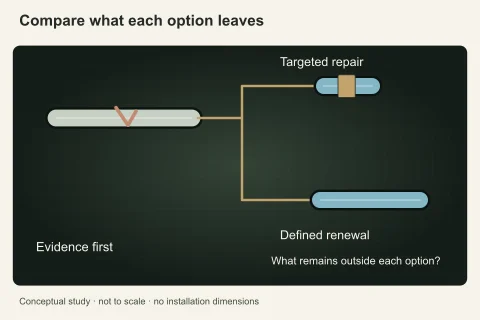
A complaint about delivery is not automatically a failed heater. Distribution, controls and usage patterns may also require examination. Tell the professional what changed and what still works. An unsupported capacity recommendation can lead to a purchased appliance before the existing system’s actual limitation has been established.
Separate regulated interfaces
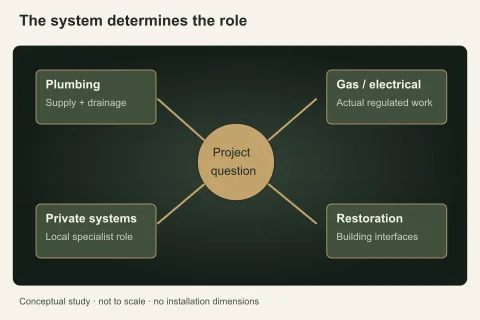
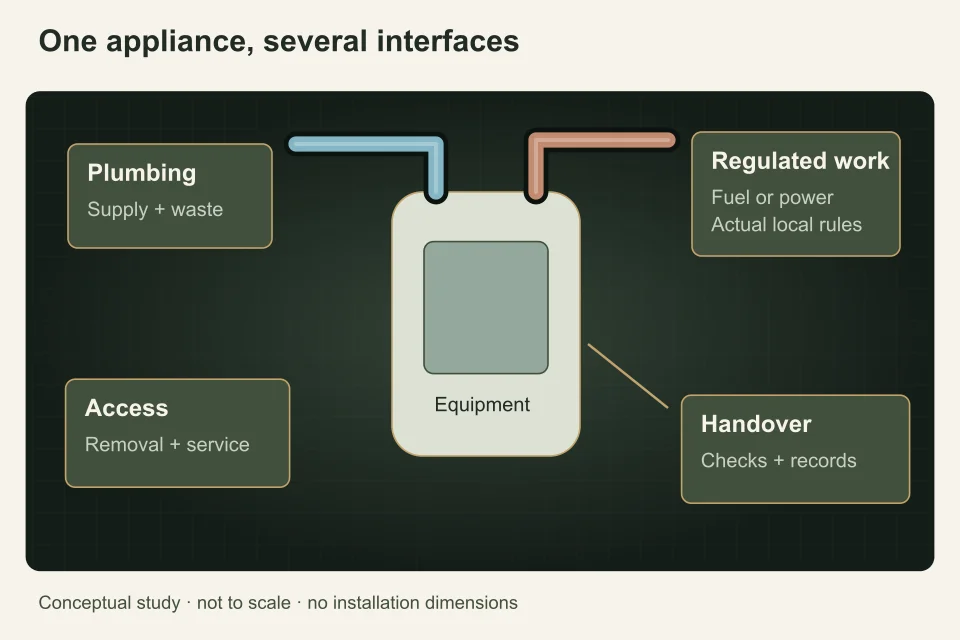
A replacement may require plumbing plus gas or electrical work, venting changes and other building interfaces. Requirements differ by province and the equipment involved. Technical Safety BC’s permit information is one regional example of gas and electrical approvals being separate from ordinary municipal plumbing questions. Use the actual regulator for your selected location rather than importing that BC process elsewhere.
Ask who performs each trade’s work, what credentials or authorization apply and who arranges inspections. A single sales contact does not prove that every regulated connection is covered. Keep the full contract responsible for coordinating the interfaces so the homeowner is not left between two incomplete scopes.
Check access before comparing products
Record where the appliance sits, available access and whether removal crosses finished rooms, stairs or a shared corridor. Product dimensions and service clearances need professional verification against the actual installation, not just a comparison of advertised capacity. Vent routes, power availability, drainage and structural support may change the feasible options. Do not alter any of these systems to make a selected appliance fit.
For a condominium or rental property, identify who authorizes a shutdown and who owns the equipment. A shared plant differs from an individual suite appliance. Delivery and removal arrangements should include protection of the occupied building and disposal of the old equipment.
Separate purchase price from installed scope
A supply-only appliance price does not include every cost of safe installation. Compare isolation, removal, new connections, vent or electrical work, approvals, commissioning and reinstatement. Ask which assumptions could change the price after the site is examined. If a product is owner-supplied, clarify responsibility for compatibility, missing components, defects and manufacturer requirements before ordering it.
Warranty language also needs allocation: manufacturer coverage and the installer’s workmanship terms may have different conditions. Ask who handles an early problem and what evidence is required. A long product warranty should not substitute for a documented installation or resolve unrelated building damage.
Define the handover and unresolved issues
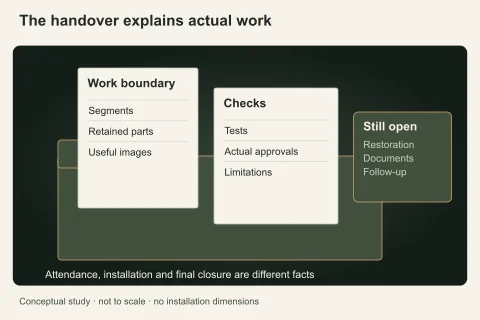
The completion record should identify the installed model, work performed, tests or commissioning checks, approvals where applicable and operating information. Ask the professional to explain limitations and maintenance duties without turning the handover into instructions for opening regulated components. Keep the invoice and warranty documentation with the property records so a later service person can identify the equipment accurately.
If the complaint remains at one fixture after the appliance is serviced, record that separately. Avoid accepting a statement that “the tank is new” as proof that distribution issues are resolved. A useful closeout relates the original observed problem to the checks completed and remaining follow-up.
Prepare a hot-water request
Build a hot-water request around the decision you need. Identify the equipment type, fuel if known, affected fixtures and the pattern of the complaint. Include shared-building authorization and safe accessible label information. Select the province and community yourself, identify the property type and say whether you are the owner, tenant or authorized manager. An approximate location is sufficient for early planning; private access instructions and personal documents belong in a later secure conversation with the person who actually needs them. Distinguish a preferred date from confirmed attendance, and tell the reviewer which facts are still unknown.
PlumbersNearMe.ca is a Canadian reference and human-reviewed request service. It is not a plumbing contractor, ranked directory or emergency dispatcher, and a submitted request does not reserve a provider. A person reviews the information and replies without a promised response time. Request the final equipment record, relevant approval details and a clear account of whether the original delivery problem was resolved. Keep the written agreement, approvals and completion evidence with the property record. Use the request form after any immediate safety need has been addressed; do not wait for this site to respond to an active hazard.
Questions people ask
Can I choose a larger heater from symptoms alone?
Symptoms do not establish capacity or the cause of poor delivery. Ask for an assessment of the equipment, distribution and demand pattern. Check space and regulated interfaces before purchasing a unit that may not suit the installation.
Is plumbing the only trade involved?
Not necessarily. Gas, electrical, venting or building work may require distinct qualified people and approvals. The fuel, equipment and jurisdiction determine the requirements. Ask the contractor to identify and coordinate each interface in writing.
Does the appliance warranty cover installation?
Manufacturer and installer obligations may differ. Request both sets of terms, commissioning records and a clear service contact. A product warranty does not automatically cover labour, access or damage outside the equipment.
What should a replacement quote include?
Compare removal, disposal, connections, regulated interfaces, approvals, commissioning and restoration. Note owner-supplied components and exclusions. An appliance-only amount and an installed scope are different purchases even when they name the same model.
Sources and further reading
- Plumber trade profile ↗ · Red Seal Program. Checked 2026-10-02.
- Permits ↗ · Technical Safety BC. Checked 2026-10-02.
- National Plumbing Code of Canada 2025 ↗ · National Research Council Canada. Checked 2026-10-02.
- Home renovations ↗ · Office of Consumer Affairs, Government of Canada. Checked 2026-10-02.
Confirm the current requirements with the responsible authority for the actual address and work. This reference does not replace site assessment or an official decision.