Identify the system rather than the room
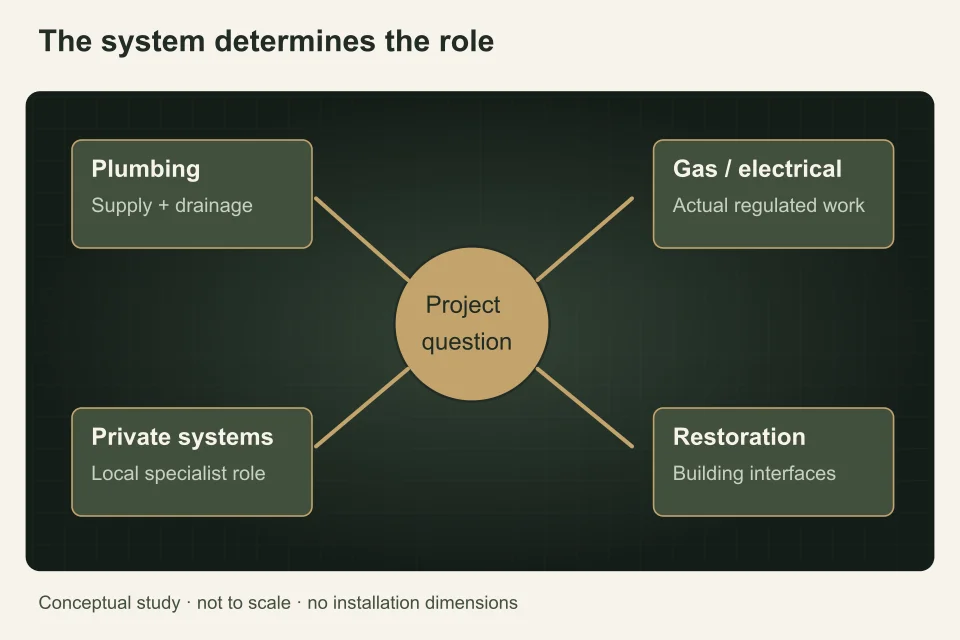
A bathroom can contain supply, drainage, ventilation, electrical and building-envelope issues. Describe what changed and what evidence is available before assigning the entire problem to one trade. A wet wall may require source investigation and later restoration; a hot-water replacement can involve fuel or power connections as well as plumbing.
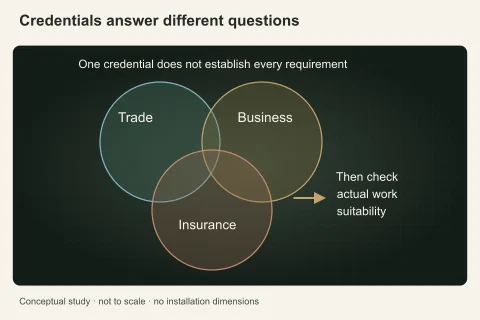
The Red Seal plumber profile describes a broad trade, but it does not certify every provider for every specialist task. Ask the proposed professional which part they examine, what they cannot establish and where another role is needed. A clear boundary reduces gaps between separate appointments.
Check fuel and power interfaces separately
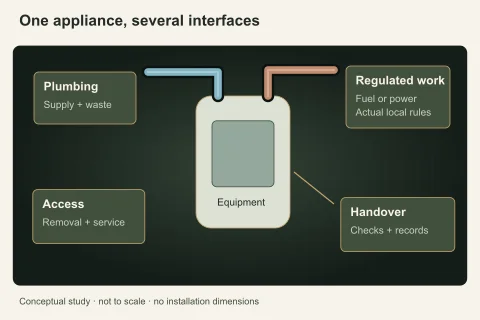
Gas and electrical work may require distinct qualifications and approvals under the relevant provincial regulator. Technical Safety BC’s permit pages illustrate that separation in BC; other provinces have their own arrangements. Ask who performs regulated connections, who holds the permit where required and who records inspection or commissioning.
Do not open an appliance or wiring enclosure to determine the role yourself. Safe accessible model information and observed symptoms are enough for an initial brief. A contractor coordinating several trades should explain the arrangement in writing so the owner is not left assuming an excluded interface is covered.
Separate drain service from buried construction
Clearing a drain, recording a camera inspection and constructing a buried replacement are different deliverables. A service operator may identify a defect without designing excavation, locating every utility or restoring pavement. Ask how the finding will be used by the responsible designer or contractor and what further measurements are needed.
Keep public connection and road-use permissions visible where relevant. A private visit does not authorize work on municipal infrastructure. The proposed method needs property-specific eligibility, access and authority checks; a photograph of a pipe or a generic trenchless advertisement is not a construction plan.
Use specialist roles for private systems
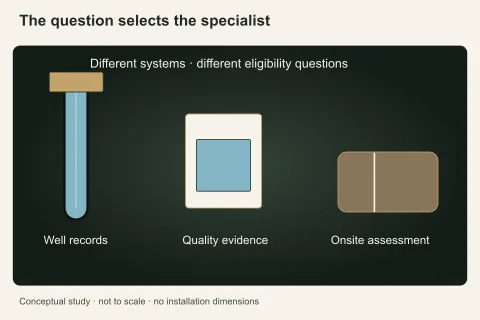
Private wells, drinking-water testing and onsite wastewater assessment may involve health authorities, laboratories and locally authorized specialists. Their roles depend on jurisdiction and the question. Fraser Health’s sewerage resources are a regional example, not a nationwide credential pathway. Establish the actual local process before buying equipment or altering the system.
Ask for the precise assessment and report: water quality, quantity, wastewater condition or future capacity are different questions. A maintenance visit should not be represented as approval for a new suite or changed occupancy. Retain records that identify the examined system and limits of the finding.
Allocate restoration and project coordination
Pipe work can leave drying, contamination control, plaster, waterproofing or landscaping to another contractor. Identify who makes and restores openings and who verifies affected building interfaces. A completed plumbing connection does not by itself certify every surrounding assembly. Shared properties also need a manager or owner to coordinate access and authorization.
For several providers, agree who holds the overall sequence and communicates changes. The owner should receive a coherent handover rather than separate invoices with an unassigned gap between them. Use written scope to connect the technical roles while preserving each person’s actual responsibilities and approval requirements.
Prepare a trade-selection request
Build a trade-selection request around the decision you need. Describe the system, observed problem, fuel or power interfaces and any private water or wastewater arrangement. State the decision you need rather than naming an unconfirmed specialist. Select the province and community yourself, identify the property type and say whether you are the owner, tenant or authorized manager. An approximate location is sufficient for early planning; private access instructions and personal documents belong in a later secure conversation with the person who actually needs them. Distinguish a preferred date from confirmed attendance, and tell the reviewer which facts are still unknown.
PlumbersNearMe.ca is a Canadian reference and human-reviewed request service. It is not a plumbing contractor, ranked directory or emergency dispatcher, and a submitted request does not reserve a provider. A person reviews the information and replies without a promised response time. Ask which roles and authority questions need clarification; independently verify the selected provider’s actual eligibility before commissioning work. Keep the written agreement, approvals and completion evidence with the property record. Use the request form after any immediate safety need has been addressed; do not wait for this site to respond to an active hazard.
Questions people ask
Can one contractor coordinate several trades?
Yes, where appropriately arranged, but ask who performs each part and what qualifications or permits apply. The contract should allocate interfaces and records. A single sales contact is not proof that every regulated task is included.
Is drain clearing the same as sewer replacement?
No. Clearing, inspection, design and construction have different scopes and evidence. Ask what the visit establishes and what further work is needed before a repair method can be selected or a buried route altered.
Who checks water quality at a private well?
Use the relevant health authority and appropriate qualified testing or assessment services. Explain the question and follow the required sampling process. A visual plumbing inspection does not establish drinking-water quality or select a treatment automatically.
Does Red Seal cover business and insurance checks?
No. Trade certification, business authorization, insurance and project suitability are separate matters. Check the rules for the chosen jurisdiction and work. Ask for appropriate current evidence without treating one credential as a universal endorsement.
Sources and further reading
- Plumber trade profile ↗ · Red Seal Program. Checked 2026-10-02.
- Permits ↗ · Technical Safety BC. Checked 2026-10-02.
- Onsite sewerage resources for owners and authorized persons ↗ · Fraser Health. Checked 2026-10-02.
- National Plumbing Code of Canada 2025 ↗ · National Research Council Canada. Checked 2026-10-02.
Confirm the current requirements with the responsible authority for the actual address and work. This reference does not replace site assessment or an official decision.