Start with system records
Gather the available well information, wastewater layout, maintenance history and previous assessment reports. Mark which records describe the current installation and which predate later changes. A seller’s sketch, visible tank lid or neighbour’s experience does not establish the full buried system. Explain whether the concern is water quantity, water quality, wastewater performance or a proposed building change.
Keep observations separate from capacity claims. A working toilet today is not evidence that an onsite system can accept a future suite. Tell the specialist what use is changing so the assessment addresses that decision.
Find the local approval path
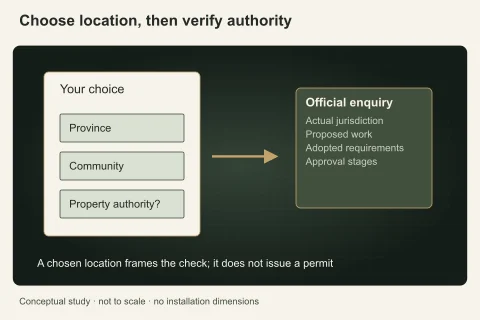
Private water and onsite wastewater processes differ across provinces and health regions. Fraser Health’s onsite sewerage resources provide one BC example of records and authorized-person involvement; they are not a Canadian application form. Identify the actual health authority, municipality or provincial department for the property, then ask which approval and professional role applies.
Use the correct property address and system history when contacting the authority. Ask how an alteration differs from routine maintenance, and who supplies required documents. Indoor plumbing approval does not automatically authorize a change to the onsite treatment system.
Match the person to the investigation
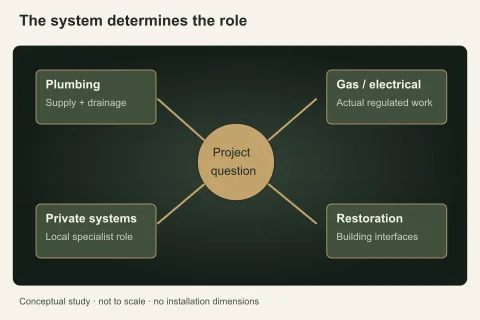
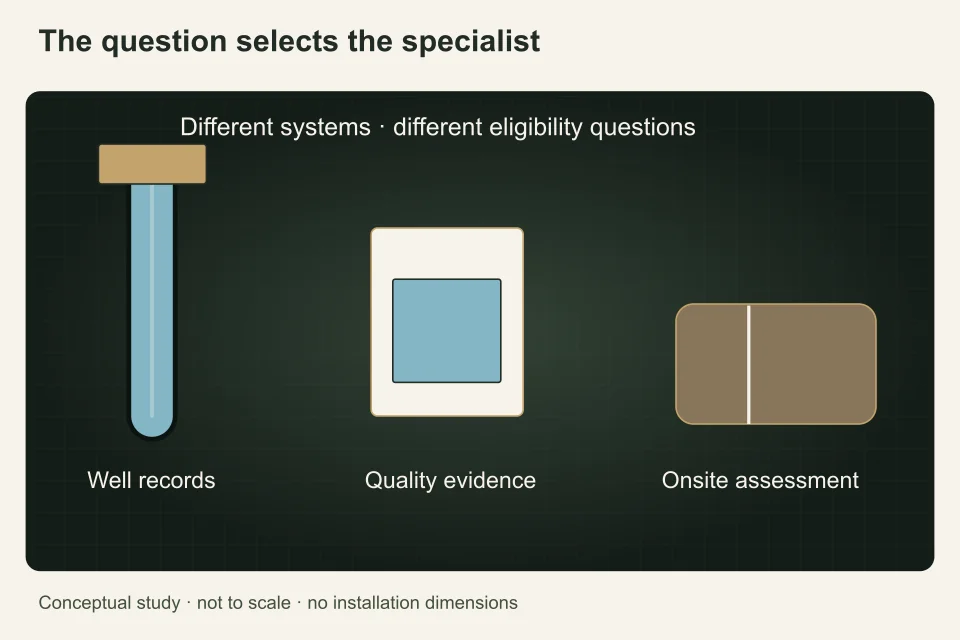
A well assessment, drinking-water sampling, onsite wastewater design and fixture repair require different expertise. Ask the proposed provider to explain which part they assess, what qualifications apply locally and what they will refer elsewhere. A general plumbing trade description is not proof of eligibility to design every rural system.
Define the deliverable: records review, professional site assessment, laboratory results or an alteration proposal. Separate a maintenance visit from certification of future capacity. Obtain the appropriate specialist before buying equipment or approving a layout that depends on an unconfirmed system assumption.
Keep hazardous investigation professional
Do not enter tanks, open unknown buried structures, handle wastewater or dismantle a well connection to obtain evidence. Confined spaces, contamination and electrical equipment require controlled professional procedures. Photographs from safe accessible ground and existing records can support a request without exposing someone to the system.
For suspected unsafe drinking water, follow the relevant health authority’s current advice. Water that looks clear is not a quality test. Ask which sampling protocol, laboratory and interpretation are appropriate; this planning guide does not provide a treatment prescription or guarantee that one sample resolves every concern.
Connect findings to the proposed use
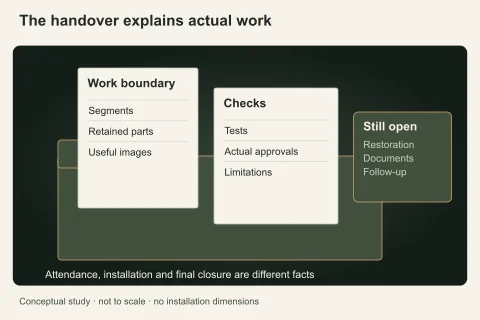
The report should identify the examined system, evidence obtained and limitations. If renovation or increased occupancy is planned, ask how the finding relates to that specific change. A repair recommendation should state the affected component and the authority steps still required. Keep indoor connections, well work and wastewater work as separate scope lines.
Retain sampling records, assessment reports and relevant approval or filing information. Ask who owns follow-up maintenance and how inaccessible components are recorded. A useful handover leaves future owners a coherent system history rather than an invoice stating only that rural plumbing was serviced.
Prepare a rural-system request
Build a rural-system request around the decision you need. Identify whether the property uses a private well, onsite wastewater or both. Describe the concern, records available and any planned change in building use. Select the province and community yourself, identify the property type and say whether you are the owner, tenant or authorized manager. An approximate location is sufficient for early planning; private access instructions and personal documents belong in a later secure conversation with the person who actually needs them. Distinguish a preferred date from confirmed attendance, and tell the reviewer which facts are still unknown.
PlumbersNearMe.ca is a Canadian reference and human-reviewed request service. It is not a plumbing contractor, ranked directory or emergency dispatcher, and a submitted request does not reserve a provider. A person reviews the information and replies without a promised response time. Request a scope matched to the relevant specialist and authority, with the evidence and limitations clearly identified. Keep the written agreement, approvals and completion evidence with the property record. Use the request form after any immediate safety need has been addressed; do not wait for this site to respond to an active hazard.
Questions people ask
Can a general plumber approve a septic alteration?
Eligibility depends on the jurisdiction and proposed work. Ask the relevant authority which professional role and filing process applies. A plumbing qualification alone should not be treated as proof of onsite wastewater design authorization.
Does clear well water mean it is safe?
Appearance is not a quality test. Follow the responsible health authority’s advice about sampling and interpretation. Identify the concern and system history without choosing a treatment solely from colour, taste or an online suggestion.
Can I use an old septic drawing for a new suite?
The drawing may help a specialist, but it does not establish current condition or future capacity. Describe the planned use and obtain the required assessment and approvals before treating an old layout as a design permission.
What records should I keep?
Retain the system layout, assessment findings, sampling results, work description and relevant authority documents. Distinguish maintenance from alterations. Note inaccessible areas and follow-up duties so future work starts from evidence rather than assumptions.
Sources and further reading
- Onsite sewerage resources for owners and authorized persons ↗ · Fraser Health. Checked 2026-10-02.
- National Plumbing Code of Canada 2025 ↗ · National Research Council Canada. Checked 2026-10-02.
- Plumber trade profile ↗ · Red Seal Program. Checked 2026-10-02.
Confirm the current requirements with the responsible authority for the actual address and work. This reference does not replace site assessment or an official decision.