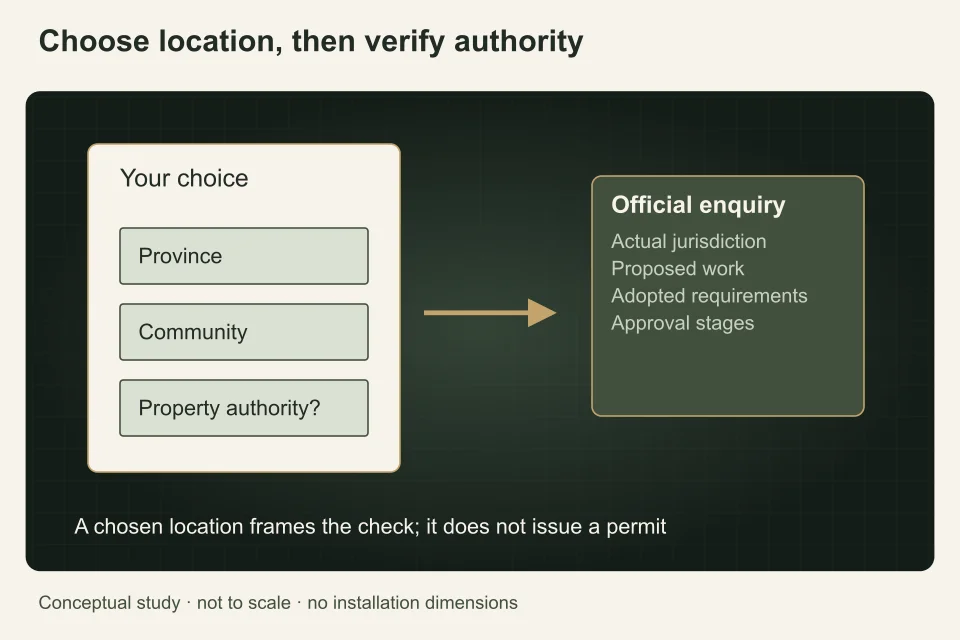
Select the actual province and municipality
Enter the community yourself rather than relying on device location or an assumed nearest city. A mailing name can differ from the governing municipality, and a rural property can have a regional or provincial approval path. Check the property record and official authority information when the boundary is uncertain.
The location tool organizes that starting context; it does not identify a contractor or certify an address’s permit jurisdiction. A neighbouring municipality’s website may be useful background, but use the authority responsible for the actual property before making an application or relying on an exemption.
Distinguish model codes from adopted requirements
The National Research Council publishes the National Plumbing Code as a model. The relevant province or territory determines adoption and amendments, and local administration can add project-specific processes. A newly published national edition is not automatically the law for every Canadian property.
Ask the responsible authority which requirements apply to the proposed work. Describe the change accurately and note the project stage. Do not use a model-code publication date to dismiss a permit question or claim that a contractor’s chosen design is approved. Professional design and authority review remain property-specific tasks.
Describe the work instead of requesting a blanket answer
Fixture repair, relocated drainage, new piping, a buried connection and a changed building use can raise different approval questions. Provide a short scope and existing permit information. Ask whether plumbing forms part of a larger building approval, what inspections occur and which regulated interfaces have separate processes.
Retain the authority’s response and clarify what information it was based on. An answer about an unchanged fixture should not be reused for a later layout alteration. Where the project changes, update the question rather than treating an earlier informal enquiry as permission for every subsequent task.
Keep utility and property permissions separate
Water shutdown, public connection work, road use and private building alteration may involve different departments. Ask the utility for the service boundary and reporting process where relevant. A municipal plumbing permit does not automatically authorize operation of public infrastructure or entry to a neighbour’s property.
Rental and condominium approvals also remain separate. Identify who can authorize access, spending and common-system changes. Record those permissions with the project scope rather than assuming that ownership of one unit or possession of one permit grants control over every affected component.
Record current links and approval stages
Use official authority websites and confirm contact information before relying on an old saved guide. Forms, fees and processes can change. This site cites official starting points but does not issue permits or guarantee that a historic document is current. Avoid buying work based on a cached exemption or a contractor’s unrelated earlier project.
Track enquiry, application, issuance, inspection and closure as distinct milestones. Ask who is responsible for each and where evidence is stored. A healthy plan makes outstanding approval visible instead of marking the project authorized because a form was submitted or a fee paid.
Prepare an authority request
Build a local-authority request around the decision you need. State the province, governing municipality if confirmed, proposed work and existing approval records. Identify unknown jurisdiction or utility boundaries rather than guessing them. Select the province and community yourself, identify the property type and say whether you are the owner, tenant or authorized manager. An approximate location is sufficient for early planning; private access instructions and personal documents belong in a later secure conversation with the person who actually needs them. Distinguish a preferred date from confirmed attendance, and tell the reviewer which facts are still unknown.
PlumbersNearMe.ca is a Canadian reference and human-reviewed request service. It is not a plumbing contractor, ranked directory or emergency dispatcher, and a submitted request does not reserve a provider. A person reviews the information and replies without a promised response time. Request the questions needed for the actual authority; a planning reply is not a permit, code ruling or authorization to begin work. Keep the written agreement, approvals and completion evidence with the property record. Use the request form after any immediate safety need has been addressed; do not wait for this site to respond to an active hazard.
Questions people ask
Does the newest national code apply everywhere?
No. The national publication is a model, and adoption and amendments depend on the jurisdiction. Ask the relevant provincial or territorial authority about applicable requirements, then confirm the actual local administration and project process.
Can a mailing address identify the authority?
It is a starting clue, not always confirmation. Check property records and the governing municipality or regional authority, especially near boundaries or in rural areas. Do not import a nearby city’s permit process automatically.
Does one permit cover every interface?
Not necessarily. Building, plumbing, gas, electrical, utility and property permissions may be distinct. Ask about the actual proposed work and existing approval scope. Keep the responsible people and closure records separate where required.
Is submitting a form enough to begin?
Do not assume so. Application, issuance, required inspections and final closure are different stages. Confirm the authority’s process and any restrictions before work starts. Retain evidence of the actual approval rather than only a submission receipt.
Sources and further reading
- National Plumbing Code of Canada 2025 ↗ · National Research Council Canada. Checked 2026-10-02.
- Permits ↗ · Technical Safety BC. Checked 2026-10-02.
- Home renovations ↗ · Office of Consumer Affairs, Government of Canada. Checked 2026-10-02.
Confirm the current requirements with the responsible authority for the actual address and work. This reference does not replace site assessment or an official decision.