Freeze the functional layout before buying
Show existing and proposed fixture positions on a measured plan in millimetres, identifying walls, doors and known service spaces. The drawing is a project brief, not an engineered installation design. Ask the professional which drainage, venting and supply constraints could affect the layout before ordering a basin, shower system or concealed valve. Keep accessibility and maintenance access in the discussion.
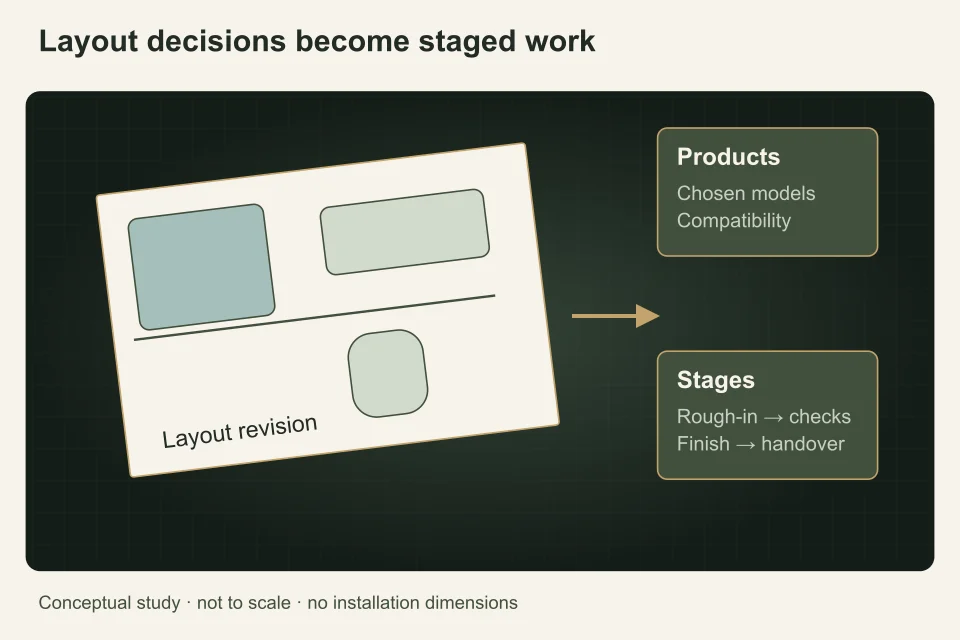
A product image rarely identifies every required component. Obtain the relevant model information and explain which items are owner-supplied. A late fixture change can affect rough-in work, finishes and inspection timing. Record the chosen revision so different trades do not build from conflicting sketches.
Ask the correct authority about the actual work
The local building department and provincial regulator can identify approvals for the proposed alteration. The National Plumbing Code is a model; its current edition is not automatically the adopted requirement in every jurisdiction. Describe fixture relocation, new spaces and regulated fuel or electrical interfaces accurately instead of asking only whether “a bathroom” needs a permit.
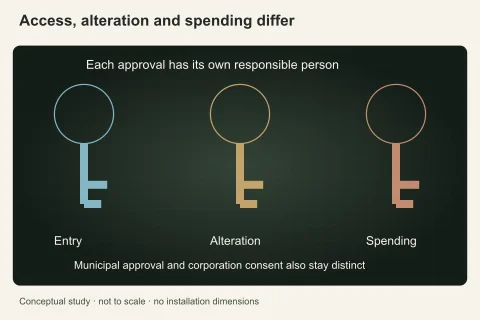
Check whether plumbing is already included in a broader building permit and how inspections are coordinated. An old approval for the original room does not authorize every later change. Where a condominium corporation or landlord must consent, obtain that authorization separately from municipal approval before opening common or rented property.
Allocate the concealed work and opening risk
Existing pipe routes may not be known until permitted investigation occurs. Specify whether the price includes exploratory openings, assessment of exposed conditions and design changes arising from new evidence. Establish a written change-approval process before ceilings or floors are opened. Neither an optimistic allowance nor an unlimited instruction to “make it work” is a useful scope.
Opening and closing finishes may belong to different trades. Coordinate hazardous-material assessment where relevant, waterproofing, fire separations and cabinet access. Do not treat a plumber’s connection work as proof that the complete room assembly meets every requirement. State who is responsible for each interface and who records its completion.
Schedule rough-in and finish as separate stages
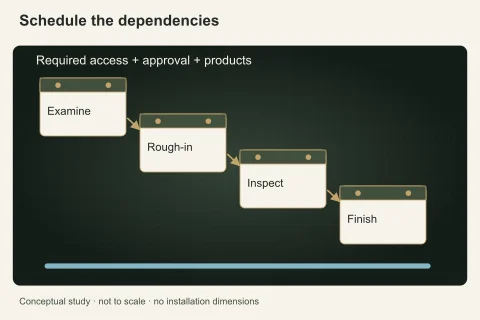
A renovation often requires work before surfaces close and a later return to install fixtures. Ask which checks must occur at each stage and who confirms that covering may proceed. Keep the authority’s actual inspection sequence visible in the project plan rather than relying on a generic online checklist. A cancelled inspection or unavailable product can affect several trades, not just the plumber.
For an occupied property, discuss temporary fixture availability, planned shutdown windows and protected access. Avoid promising uninterrupted use if the work requires isolation. Agree on how the contractor reports a condition that makes the planned sequence impractical before further finishes conceal the problem.
Compare a complete scope and closeout
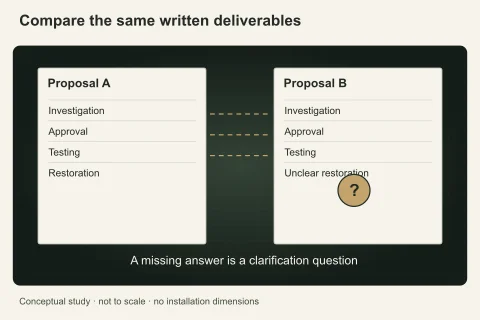
List demolition interfaces, supply and waste connections, product supply, approvals, testing, finishing and exclusions. Ask what allowance remains provisional and what must be confirmed before the price becomes firm. Compare the same layout revision across quotes. A low figure built around different fixtures or omitted reinstatement is not a like-for-like alternative.
The final handover should include model details, accessible-work photographs, test records and relevant inspection closure. Keep the revised route and any service-access requirements with the property file. Record retained older piping outside the renovated area so a newly finished room is not confused with a whole-house system replacement.
Prepare a renovation request
Build a renovation request around the decision you need. Describe the existing and proposed room, layout revision, chosen products and stage of approvals. Identify occupied-home constraints, concealed access and the people authorized to approve changes. Select the province and community yourself, identify the property type and say whether you are the owner, tenant or authorized manager. An approximate location is sufficient for early planning; private access instructions and personal documents belong in a later secure conversation with the person who actually needs them. Distinguish a preferred date from confirmed attendance, and tell the reviewer which facts are still unknown.
PlumbersNearMe.ca is a Canadian reference and human-reviewed request service. It is not a plumbing contractor, ranked directory or emergency dispatcher, and a submitted request does not reserve a provider. A person reviews the information and replies without a promised response time. Retain the final layout revision, approval records, product information and any clearly excluded restoration work. Keep the written agreement, approvals and completion evidence with the property record. Use the request form after any immediate safety need has been addressed; do not wait for this site to respond to an active hazard.
Questions people ask
Can I order fixtures before a plumbing review?
Early product ideas help, but confirm rough-in compatibility, dimensions and access before committing. Concealed components are especially sensitive to layout and finish changes. Record who supplies each item and who accepts responsibility for compatibility.
Does a building permit always include plumbing?
That depends on the jurisdiction and permit scope. Check the actual record with the authority rather than assuming inclusion. Ask who arranges plumbing inspections and whether regulated gas or electrical work needs separate approval.
Why is there a provisional allowance?
Concealed routes or unchosen products may prevent a complete price. Identify exactly what remains uncertain and how it becomes an approved change. A useful allowance names assumptions and excludes neither evidence nor authorization.
When can walls be closed?
Follow the project’s actual inspection and testing sequence, confirmed by the responsible authority and professionals. Do not use a generic calendar as permission to cover work. Retain the relevant records before finishing conceals the system.
Sources and further reading
- National Plumbing Code of Canada 2025 ↗ · National Research Council Canada. Checked 2026-10-02.
- Home renovations ↗ · Office of Consumer Affairs, Government of Canada. Checked 2026-10-02.
- Permits ↗ · Technical Safety BC. Checked 2026-10-02.
Confirm the current requirements with the responsible authority for the actual address and work. This reference does not replace site assessment or an official decision.