Identify every space needed
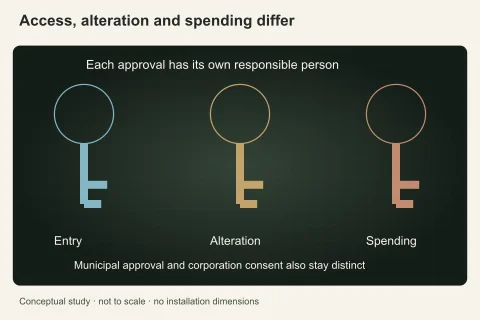
Ask the provider which rooms, service areas and adjoining spaces must be available. A ceiling investigation can require the room above; a shared riser can need access to more than one unit. Record who controls each space and who can authorize entry. Do not assume the commissioning resident has authority over common rooms or neighbours’ homes.
Describe safe equipment routes, stairs and protected finishes without attempting to size the professional’s equipment yourself. A photograph of the entry can help clarify practical constraints. Keep security codes and unrelated occupant information out of broad planning documents.
Confirm the work sequence
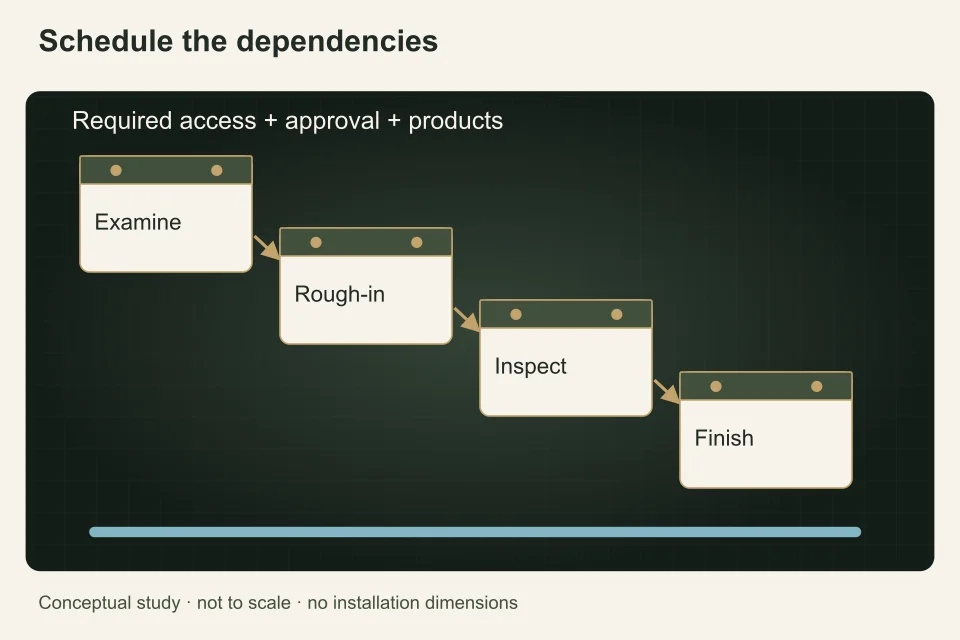
Separate investigation, opening, rough-in, testing, inspection, closing and final installation where relevant. Ask which stage depends on evidence or approval and who confirms readiness. A general completion date may conceal several return visits and contributions from other trades. Put the dependencies in the project plan rather than assuming every task happens during one appointment.
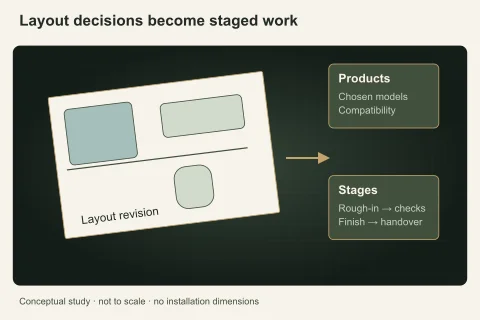
Where products are owner-supplied, confirm their availability and compatibility before the scheduled stage. A box on site is not proof that all required components are present. Record the accepted layout revision so the installer and finishing trades work from the same decision.
Plan service interruption with authorized people
Ask which fixtures or users will lose service and how notice is coordinated. Shared-system operations belong to responsible professionals and authorized building personnel. A tenant or unit owner should not manipulate common valves to prepare for attendance. Confirm who communicates any extension when exposed conditions change the expected duration.
State occupancy needs, accessibility concerns and the minimum facilities required during the project. Let the contractor explain feasible temporary arrangements and their limitations. Do not promise residents uninterrupted water or drainage when the actual work requires isolation or leaves essential connections incomplete.
Allocate preparation and restoration
Identify who removes contents, protects surfaces, makes openings and reinstates finishes. Drying, contamination work, waterproofing and fire-separation details may involve other qualified people. A plumber’s visit does not automatically cover those tasks. Ask which work must be completed before the next stage can safely proceed.
Use a written preparation list agreed with the provider. Do not undertake hazardous demolition, disturb suspect material or open regulated equipment to save appointment time. Professional access planning should make the task practical while preserving the evidence and building systems that the investigation needs to assess.
Record changes and closeout milestones
Agree how unavailable access, new findings or delayed approvals affect the schedule and financial terms. A preferred appointment is not confirmed until the provider accepts it, and a planning request does not reserve attendance. Keep the actual contact and escalation route for project changes with the responsible owner or manager.
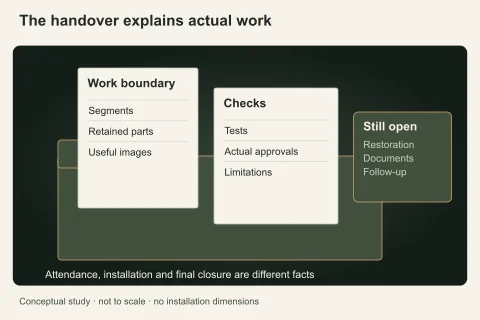
Completion should connect to documented checks, relevant inspection closure and remaining restoration, not only the last day a contractor attended. Ask what must be handed over before the project is considered closed. A realistic schedule identifies unfinished duties instead of disguising them behind an optimistic final date.
Prepare an access request
Build a access-and-scheduling request around the decision you need. List required spaces, authorized contacts, occupied-property constraints, product availability and the approval stage. Separate your preferred dates from confirmed arrangements. Select the province and community yourself, identify the property type and say whether you are the owner, tenant or authorized manager. An approximate location is sufficient for early planning; private access instructions and personal documents belong in a later secure conversation with the person who actually needs them. Distinguish a preferred date from confirmed attendance, and tell the reviewer which facts are still unknown.
PlumbersNearMe.ca is a Canadian reference and human-reviewed request service. It is not a plumbing contractor, ranked directory or emergency dispatcher, and a submitted request does not reserve a provider. A person reviews the information and replies without a promised response time. Request the sequence, interruption plan and remaining restoration responsibilities to be stated before attendance is agreed. Keep the written agreement, approvals and completion evidence with the property record. Use the request form after any immediate safety need has been addressed; do not wait for this site to respond to an active hazard.
Questions people ask
Does a preferred date reserve a visit?
No. Confirm attendance directly with the actual provider and responsible property contact. A human-reviewed request has no booking or response-time promise. Record access and preparation requirements alongside any accepted appointment.
Can I prepare by opening walls myself?
Do not assume that is safe or authorized. Concealed systems, hazardous materials and building assemblies may need professional assessment. Agree the preparation scope and who performs it rather than removing evidence or creating an unsafe opening.
Who notices neighbouring units about shutdowns?
Use the authorized building-management process. The provider should identify affected systems and practical timing, while the responsible manager coordinates notices and access. One resident’s availability does not grant authority to interrupt shared service.
When is the job actually complete?
Use the agreed work boundaries, testing, required inspection records and restoration milestones. The final attendance date alone may leave duties unfinished. Retain a handover that identifies remaining tasks, restrictions and the person responsible for them.
Sources and further reading
- Home renovations ↗ · Office of Consumer Affairs, Government of Canada. Checked 2026-10-02.
- Division of repair duties in a strata ↗ · Province of British Columbia. Checked 2026-10-02.
- National Plumbing Code of Canada 2025 ↗ · National Research Council Canada. Checked 2026-10-02.
Confirm the current requirements with the responsible authority for the actual address and work. This reference does not replace site assessment or an official decision.