Require evidence for the affected component
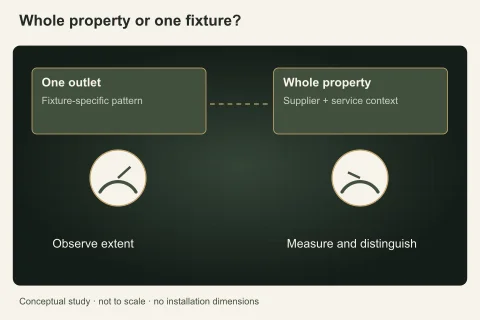
Ask what failed, how it was examined and which segment the evidence describes. One leaking joint does not establish every concealed branch’s condition. A camera observation may support a drain repair but not show all buried infrastructure. Keep the confirmed finding distinct from an inference based on age or another property.
Request the evidence in a form another professional can assess: a route description, original recording, useful photographs or written findings. Do not demand invasive testing without a purpose. The investigation should address the decision being made and state where uncertainty still limits a broader condition claim.
Compare the outcomes of each option
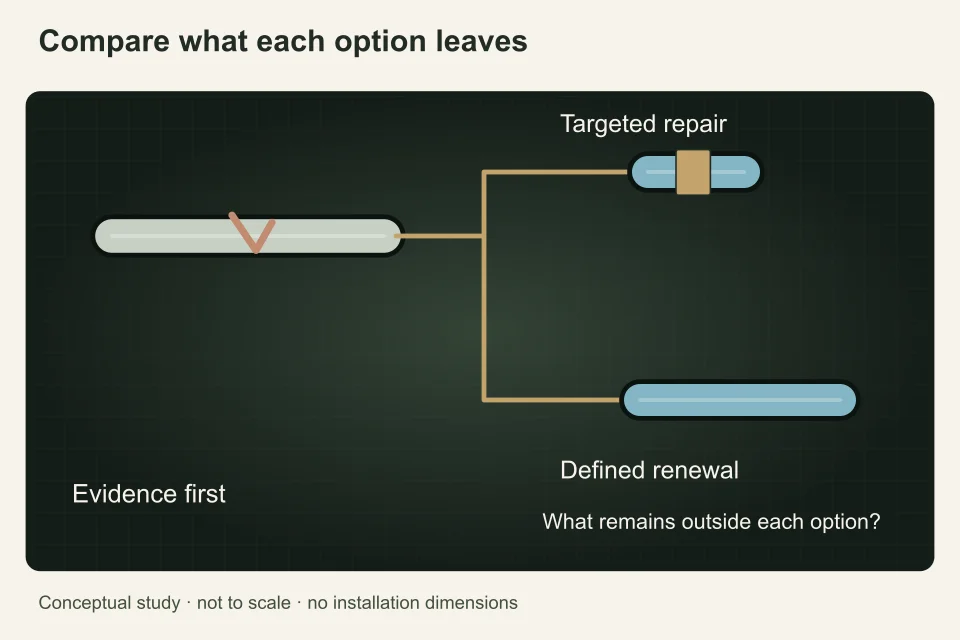
A targeted repair may address the confirmed defect while retaining surrounding material. Replacement may renew a defined route but introduce more access, connection and restoration work. Ask what each option resolves, what remains and what evidence supports the expected result. Neither option is automatically preferable across all systems.
Define the boundaries precisely. “Repipe the home” should identify supply segments, fixture connections and any excluded service line; “replace the drain” should name the route. A broad label can conceal retained old sections. Compare those retained components and their unresolved questions rather than assuming a new product means a completely renewed property.
Include access and building consequences
Opening finished surfaces, excavation, shared shutdowns and product removal can dominate the practical difference. Ask which alternative requires those tasks and who restores each interface. A less invasive method still needs suitable access and may not correct every condition. Do not assume a lining or other method can change an existing pipe’s grade.
Check approvals for the actual alteration and coordinate other trades where required. A repair performed through an accessible opening and a rerouted replacement may create different permit or design questions. The local authority and responsible professional should address them before the comparison becomes a purchase decision.
Separate future plans from a present failure
A planned renovation, increased occupancy or equipment change may affect the value of broader work. Tell the professional what is genuinely planned and what remains speculative. Avoid paying for an assumed future use that has not been designed or approved. Conversely, a small repair may be reasonable while a larger renovation plan is still unsettled.
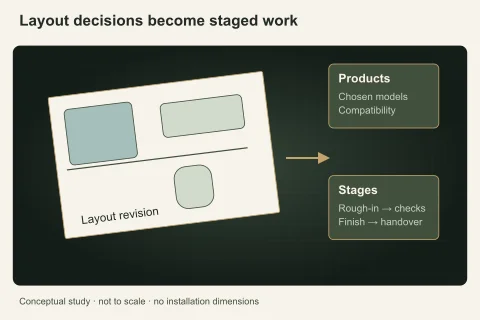
Ask whether the alternatives can be staged and what information is needed before the next stage. Consider usable fixture availability and occupied-home constraints. A replacement schedule should describe planned interruption without promising that every concealed condition will fit an optimistic calendar.
Compare full scope and recorded limitations
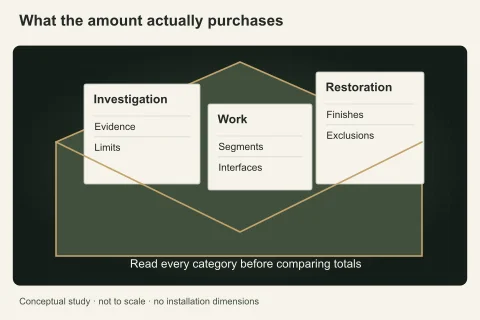
Place diagnosis, materials, access, approvals, checks, restoration and exclusions beside each alternative. Ask about workmanship terms and the evidence delivered at completion. Avoid converting a marketing lifespan into a guaranteed service life for your installation. Actual condition, product suitability and work quality require property-specific assessment.
The accepted proposal should explain why the option was selected and identify retained sections or unresolved findings. Keep that record with photographs and relevant inspection closure. If later work is needed, the next owner or professional can distinguish the intended boundary from an assumption that everything was replaced.
Prepare an options request
Build a repair-or-replacement request around the decision you need. Describe the confirmed failure, evidence available, proposed alternatives and future plans that are actually relevant. Include access and restoration constraints, not just product preferences. Select the province and community yourself, identify the property type and say whether you are the owner, tenant or authorized manager. An approximate location is sufficient for early planning; private access instructions and personal documents belong in a later secure conversation with the person who actually needs them. Distinguish a preferred date from confirmed attendance, and tell the reviewer which facts are still unknown.
PlumbersNearMe.ca is a Canadian reference and human-reviewed request service. It is not a plumbing contractor, ranked directory or emergency dispatcher, and a submitted request does not reserve a provider. A person reviews the information and replies without a promised response time. Ask for the outcome, retained components and uncertainty of each option to be stated on a comparable written basis. Keep the written agreement, approvals and completion evidence with the property record. Use the request form after any immediate safety need has been addressed; do not wait for this site to respond to an active hazard.
Questions people ask
Does old pipe always need replacement?
Age can prompt investigation but does not establish every component’s condition. Ask for evidence, failure history and defined boundaries. Compare what a targeted repair resolves with the practical scope and remaining uncertainty of replacement.
Can lining fix every drain defect?
No method suits every condition. Access, pipe condition and geometry need assessment, and lining does not regrade a sagging route. Request the evidence supporting eligibility and a clear statement of defects that would remain.
How should I compare warranties?
Read the actual product and workmanship terms, exclusions and claims process. A marketing lifespan is not a property-specific guarantee. Keep installation and completion evidence because warranty administration may depend on those records.
Should future renovation drive the choice?
Only where the plan is sufficiently defined and relevant. Explain the proposed layout and approval stage. Ask whether work can be staged; do not buy an oversized replacement solely for an unconfirmed future use.
Sources and further reading
- National Plumbing Code of Canada 2025 ↗ · National Research Council Canada. Checked 2026-10-02.
- Home renovations ↗ · Office of Consumer Affairs, Government of Canada. Checked 2026-10-02.
Confirm the current requirements with the responsible authority for the actual address and work. This reference does not replace site assessment or an official decision.