Describe an event, not a diagnosis
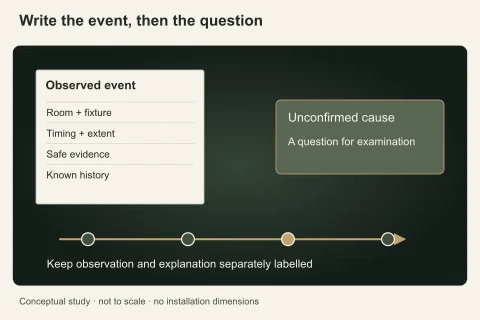
Write down the fixture or room affected, when the sign first appeared and what was happening at the time. A wet cabinet after using a sink differs from dampness during rain, even if both appear below the same counter. Say whether the issue is constant, intermittent or increasing. Keep earlier invoices and describe any work done shortly before the change. These details help a professional plan an examination without accepting an unsupported cause.
A useful brief says “water appears below the basin after use”, rather than “replace the drain”. The second description skips the investigation and may exclude supply connections, seals or another nearby source that still needs checking.
Set the first visit’s boundaries
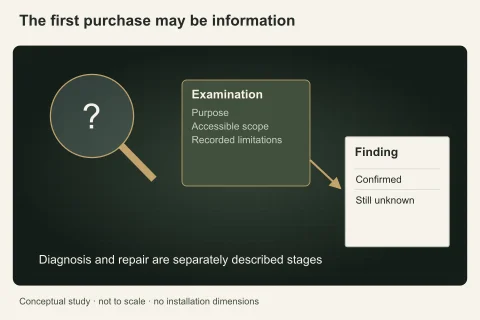
Ask what the diagnostic visit includes: accessible visual examination, controlled testing, a written finding and time to explain the next step. Opening a ceiling, specialist locating and restoring finished surfaces may be separate tasks. Establish who can authorize additional work and whether the first payment covers an investigation even when no immediate repair is possible. The same visit label can describe very different deliverables.
For an occupied building, tell the contractor about restricted rooms, another unit above the problem and any shared service space. Do not promise access you cannot authorize. Agree on a safe appointment plan before someone arrives with equipment that cannot reach the affected area.
Keep urgent risk outside ordinary planning
Active flooding near electricity, a sagging wet ceiling, sewage exposure and a suspected gas problem need the appropriate emergency or utility response. Do not enter hazardous water, dismantle a ceiling or manipulate unfamiliar shared valves to collect a better photograph. From a safe place, explain the condition to the responsible emergency, utility or building-management service. An online request with no attendance promise cannot control that risk.
Once the immediate situation is managed, record which service attended and what temporary action was taken. A temporary isolation or containment measure does not establish the permanent repair scope. Ask what remains unsafe or unusable until the next authorized investigation.
Separate the pipe repair from the room repair
A plumbing repair may stop a source while leaving drying, contamination assessment, plaster, cabinetry or flooring unresolved. Compare the proposed repaired component with the full building recovery plan. Ask who photographs concealed work, who restores an opening and who confirms that the affected space can be used again. Avoid interpreting a short invoice as a complete damage-restoration contract.
Ownership and payment are another separate question. A landlord, condominium corporation or insurer may need a cause report before deciding responsibility. Give the plumber the required evidence format without asking them to make a legal coverage decision. Keep the authorization questions separate from technical observations.
Define the evidence of completion
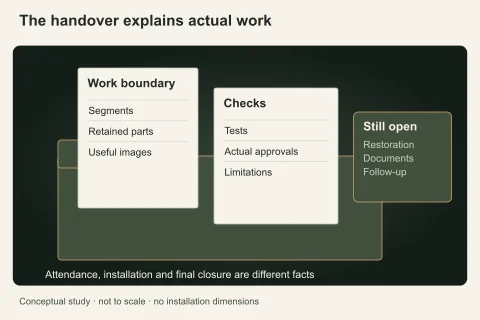
Request a description of the failed component, the work performed and the checks completed afterwards. The handover should identify any unexamined area, remaining symptom or recommended follow-up. Where a permit or inspection is required, ask who holds its record and what milestone constitutes closure. The relevant authority depends on the municipality and province you select; a national model code is not proof of a particular local approval.
Retain a clear invoice and any useful photographs with the maintenance history. If the same symptom returns, that record allows the next professional to distinguish recurrence at the repaired connection from a different nearby issue, instead of starting with an assumption.
Prepare a repair request
Build a repair request around the decision you need. List the affected fixture, the timing of the symptom, previous repairs and safe accessible evidence. Explain whether another unit or common system is involved. Select the province and community yourself, identify the property type and say whether you are the owner, tenant or authorized manager. An approximate location is sufficient for early planning; private access instructions and personal documents belong in a later secure conversation with the person who actually needs them. Distinguish a preferred date from confirmed attendance, and tell the reviewer which facts are still unknown.
PlumbersNearMe.ca is a Canadian reference and human-reviewed request service. It is not a plumbing contractor, ranked directory or emergency dispatcher, and a submitted request does not reserve a provider. A person reviews the information and replies without a promised response time. Ask for the confirmed finding, repaired component and any unfinished restoration to be recorded separately. Keep the written agreement, approvals and completion evidence with the property record. Use the request form after any immediate safety need has been addressed; do not wait for this site to respond to an active hazard.
Questions people ask
Can a photograph establish the repair?
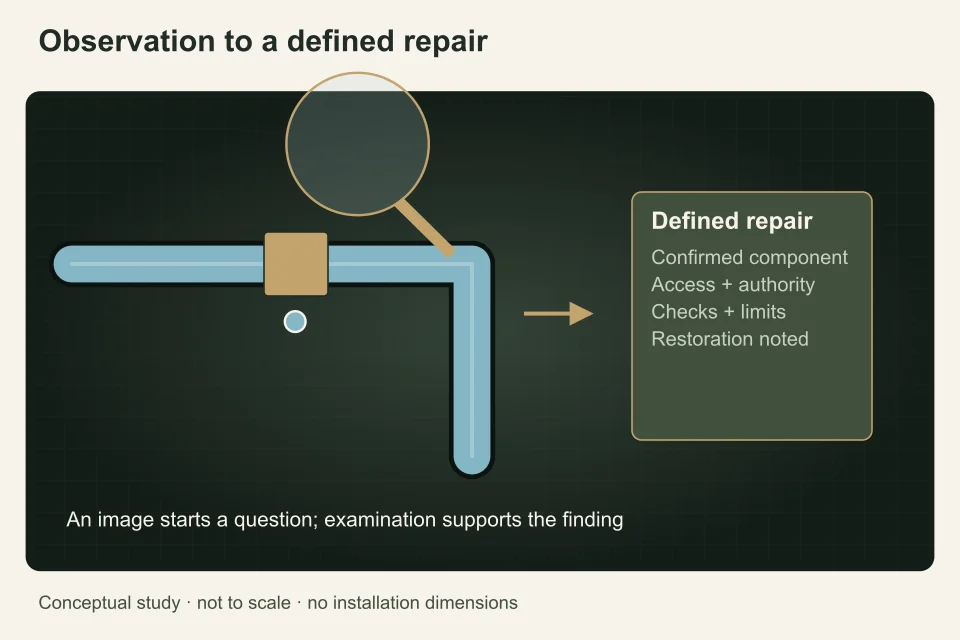
A photograph may help locate the symptom, but concealed connections and alternative sources often require examination. Send a safe overview and the event history. Ask what the first visit can establish before agreeing to a specific replacement.
Is every repair permit-free?
No single Canadian exemption applies to every repair. Describe the proposed work to the relevant municipal or provincial authority and check existing approvals. A small component repair and a system alteration may receive different treatment.
Should I replace all old pipe after one leak?
One leak does not establish the condition of every branch. Ask what broader evidence supports replacement, which segments were examined and what alternatives exist. A larger proposal should define its boundaries and remaining uncertainty.
Does the request book a plumber near me?
No. The request receives human review without a booking or response-time promise. Use appropriate urgent channels for active hazards. Contractor selection, attendance and the work agreement must be confirmed separately with the provider.
Sources and further reading
- National Plumbing Code of Canada 2025 ↗ · National Research Council Canada. Checked 2026-10-02.
- Floods — Get prepared ↗ · Public Safety Canada. Checked 2026-10-02.
- Home renovations ↗ · Office of Consumer Affairs, Government of Canada. Checked 2026-10-02.
Confirm the current requirements with the responsible authority for the actual address and work. This reference does not replace site assessment or an official decision.