Name the affected place and system
Start with the room, fixture or accessible component and the visible sign. Say whether water, wastewater, pressure, temperature or drainage changed. Include whether the issue affects one fixture, several rooms or multiple units. Avoid a broad phrase such as “all plumbing broken” when a specific pattern can be described.
For early planning, the selected community and property type may be enough location context. Do not include entry codes or unrelated resident details. A simple sketch showing affected rooms and known service spaces can help, provided it is labelled as an observation rather than a verified pipe route.
Record timing and triggers
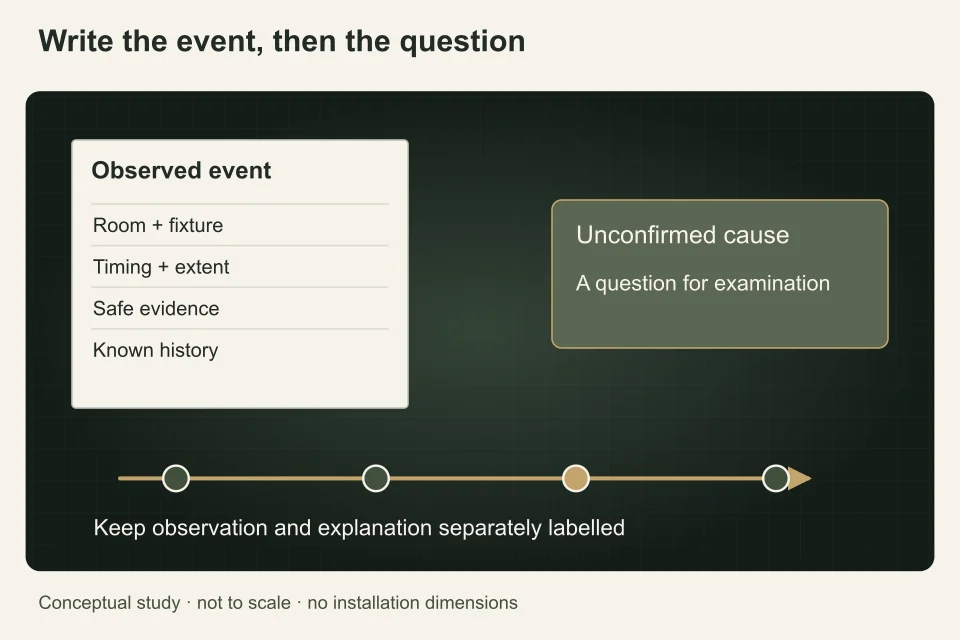
Write when the symptom first appeared and whether it follows fixture use, rainfall, a shutdown or recent work. Distinguish an event you observed from a pattern someone else reported. A wet cabinet after using the sink is useful evidence; a declared failed drain fitting may be a guess. State how often the event occurs and whether it is worsening.
Do not repeatedly reproduce an overflow or operate unfamiliar equipment to gather data. The professional can plan controlled checks. An honest “not known” is more useful than a confident answer based on unsafe testing or a theory borrowed from another property.
Preserve prior work and utility information
Include relevant earlier invoices, inspection recordings and notices. Identify the date, examined segment and limitation of each record. A past repair in the same room may be relevant without proving the present cause. Keep original camera files if available rather than only a selected screenshot.
Ask the utility or building manager whether there is a known wider event where appropriate. Report the reference number and confirmed information without interpreting it as a private diagnosis. A municipal interruption and an indoor fixture issue may coexist; the brief should allow the investigator to consider both rather than choose prematurely.
Use photographs safely and selectively
Photograph accessible symptoms from a dry safe position. An overview plus a clear visible detail often gives more context than an extreme close-up. Do not open walls, remove covers or reach around hot or electrical equipment to improve the image. A photograph cannot establish every concealed condition, so explain what remains inaccessible.
Exclude mail, identity documents, access codes and people who do not need to appear. A service label can be useful if safely accessible, but share only the information relevant to equipment identification. Keep private ownership or tenancy documents for the appropriate later secure process.
State the decision and authorization
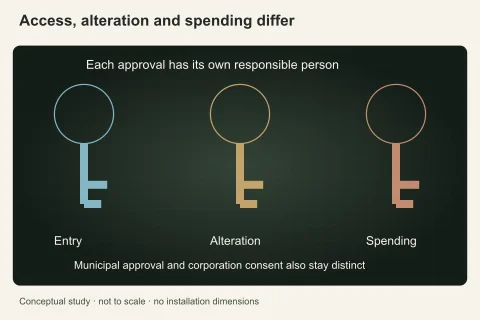
Explain whether you need investigation, a repair scope, a quote comparison or records for another responsible party. Identify who owns or manages the property and who can authorize access or additional work. A tenant can report symptoms without claiming authority to alter common systems. A condominium owner may need corporation approval.
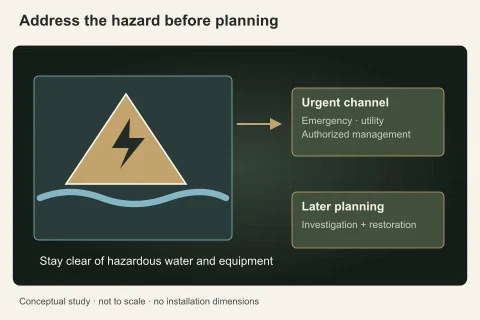
Describe preferred timing as a request, not a booking. If the situation is hazardous, use the appropriate urgent channel before this planning process. The issue tool helps organize basic observations but does not diagnose a fault or summon a provider.
Prepare the final brief
Build a problem-description request around the decision you need. List the affected fixture, timing, known history and safe evidence. State what remains unknown, who can authorize work and which decision you need from the next investigation. Select the province and community yourself, identify the property type and say whether you are the owner, tenant or authorized manager. An approximate location is sufficient for early planning; private access instructions and personal documents belong in a later secure conversation with the person who actually needs them. Distinguish a preferred date from confirmed attendance, and tell the reviewer which facts are still unknown.
PlumbersNearMe.ca is a Canadian reference and human-reviewed request service. It is not a plumbing contractor, ranked directory or emergency dispatcher, and a submitted request does not reserve a provider. A person reviews the information and replies without a promised response time. Keep a copy of the original observations so later findings can be compared without rewriting history to fit the chosen repair. Keep the written agreement, approvals and completion evidence with the property record. Use the request form after any immediate safety need has been addressed; do not wait for this site to respond to an active hazard.
Questions people ask
Should I name the repair I think is needed?
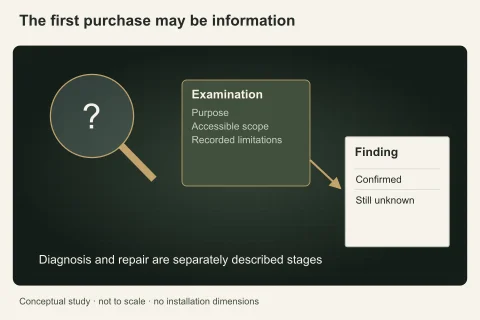
You can mention a suggestion as unconfirmed, but lead with observed symptoms. A prescribed method may skip important alternatives. Ask what evidence would support the repair before turning an assumption into the requested scope.
How much location detail should I provide first?
Select the province and community, then describe the property type. Early planning rarely needs access codes or unrelated documents. Precise attendance details can be shared later with the confirmed person who actually needs them.
Are photographs enough for a quote?
Sometimes visible tasks are clear, but concealed causes and access may require examination. Explain limitations and ask which assumptions remain. A photo-based amount should not be treated as certainty about every hidden component.
What if I do not know the pipe material?
Say it is unknown and provide relevant records if available. Do not dismantle or scratch components to guess. The professional can explain appropriate identification and which segment a finding actually describes.
Sources and further reading
- Home renovations ↗ · Office of Consumer Affairs, Government of Canada. Checked 2026-10-02.
- Floods — Get prepared ↗ · Public Safety Canada. Checked 2026-10-02.
- Consent and personal information ↗ · Office of the Privacy Commissioner of Canada. Checked 2026-10-02.
Confirm the current requirements with the responsible authority for the actual address and work. This reference does not replace site assessment or an official decision.