Describe the hazard from a safe position
State whether water is rising, sewage is present, a ceiling is unstable or electricity may be affected. A blocked fixture that is not overflowing differs from active flooding beside electrical equipment. Do not enter water, touch wet equipment or stand beneath damaged material to obtain a better photograph. Public Safety Canada’s flood guidance explains the need for caution around electricity and contaminated water.
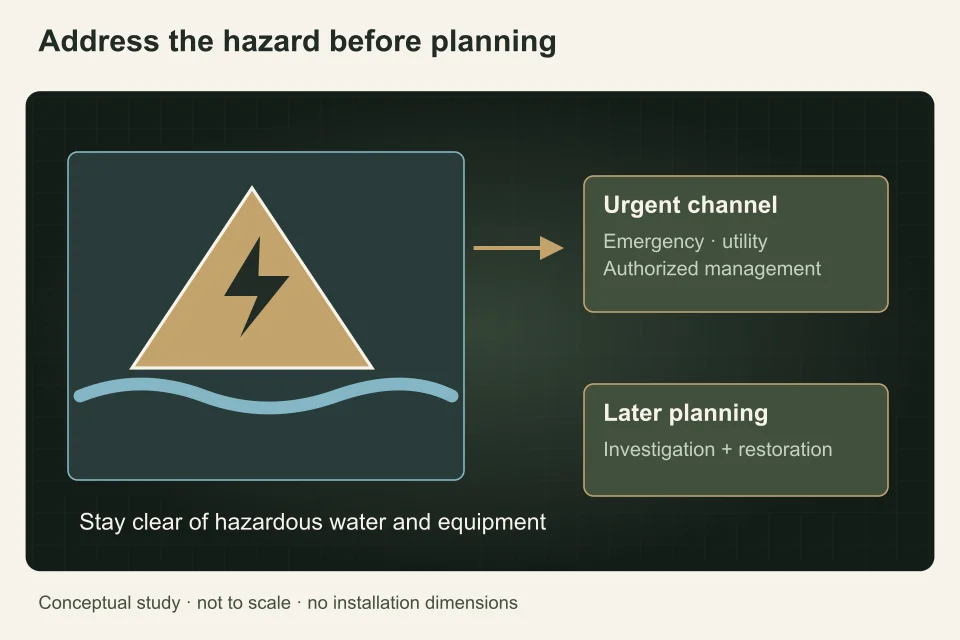
If there is immediate danger to people, use the appropriate emergency response. For a suspected gas incident, follow the relevant utility’s emergency instructions. The correct urgent contact depends on the hazard, not simply on the word plumbing.
Contact the responsible urgent channel
For public water or sewer concerns, use the local utility’s reporting process. In a condominium, contact authorized building management for shared systems and access. In a rental, use the landlord’s emergency contact and the jurisdiction’s repair process. These channels address different responsibilities; an online planning reviewer cannot control a public main or operate a shared shutoff.
Tell the receiving service the property location, observed hazard and people affected. Keep any incident reference and attendance details. Avoid declaring a private repair method before the immediate condition is assessed, because the first safe response may differ from the permanent work eventually required.
Avoid improvising a hazardous intervention
Do not force unfamiliar valves, open contaminated cleanouts, dismantle regulated equipment or remove wet structural material. The fact that a step appears in a video does not establish that it is safe for your building. Shared systems and concealed components can affect other occupants. Follow instructions from the responsible emergency, utility or qualified professional.
If a known safe isolation action has already been taken under appropriate guidance, report it accurately. Distinguish that temporary action from diagnosis. A stopped flow or isolated appliance may reduce an immediate problem while leaving the cause, affected material and permanent restoration unresolved.
Preserve useful facts without exposure
Record the event time, affected rooms and recent fixture use from a dry safe place. Retain utility notices and previous repair records. Photographs should show accessible conditions without people’s documents, medical information or security details. Do not repeatedly run fixtures to reproduce an overflow or gather evidence that increases the hazard.
After urgent attendance, ask what was observed, what temporary action occurred and which restrictions remain. That information helps the next authorized person plan a repair. It can also distinguish new symptoms from damage already recorded without requiring the resident to conduct unsafe testing.
Move to permanent scope after control
Once the responsible service considers the immediate situation managed, separate investigation, pipe repair and property restoration. Identify who authorizes each task and how new evidence changes the scope. Drying, contamination assessment and finishes may need other specialists. A temporary measure does not certify that the room or complete system is ready for ordinary use.
Arrange a written plan for remaining work, approvals and completion evidence. If rental or condominium duties are disputed, use the applicable process rather than assuming a plumber’s invoice settles responsibility. Keep the incident reference alongside the later repair record so the sequence remains clear.
Prepare the later planning request
Build a post-incident request around the decision you need. Describe the urgent service already contacted, temporary action, remaining restrictions and unresolved repair or restoration questions. Do not submit while waiting for this site to control an active hazard. Select the province and community yourself, identify the property type and say whether you are the owner, tenant or authorized manager. An approximate location is sufficient for early planning; private access instructions and personal documents belong in a later secure conversation with the person who actually needs them. Distinguish a preferred date from confirmed attendance, and tell the reviewer which facts are still unknown.
PlumbersNearMe.ca is a Canadian reference and human-reviewed request service. It is not a plumbing contractor, ranked directory or emergency dispatcher, and a submitted request does not reserve a provider. A person reviews the information and replies without a promised response time. Ask for the next investigation and scope questions to be organized, while attendance and safety decisions remain with the appropriate responsible professionals. Keep the written agreement, approvals and completion evidence with the property record. Use the request form after any immediate safety need has been addressed; do not wait for this site to respond to an active hazard.
Questions people ask
Does an urgent flag summon a plumber?
No. The tool identifies safety concerns for planning and does not dispatch anyone. Use the appropriate emergency, utility or building-management channel for active hazards. Do not wait for a human-reviewed site request to control danger.
Should I enter water to turn equipment off?
Do not enter hazardous water or touch wet electrical equipment. Follow the relevant emergency or utility instructions from a safe place. The building conditions matter, and this guide does not prescribe an improvised isolation procedure.
Can I keep using fixtures after a backup?
Ask the attending professional or responsible service about restrictions. Repeated use may worsen an overflow. Record what remains unavailable and do not treat temporary clearing or isolation as confirmation that every affected area is safe.
When is the planning form useful?
After immediate safety needs are addressed, it can organize unresolved investigation, repair and restoration questions. Include the incident history and known restrictions. It is not an emergency booking or an assurance of attendance.
Sources and further reading
- Floods — Get prepared ↗ · Public Safety Canada. Checked 2026-10-02.
- Repairs and maintenance ↗ · Province of British Columbia. Checked 2026-10-02.
- Home renovations ↗ · Office of Consumer Affairs, Government of Canada. Checked 2026-10-02.
Confirm the current requirements with the responsible authority for the actual address and work. This reference does not replace site assessment or an official decision.