Map the affected route from observations
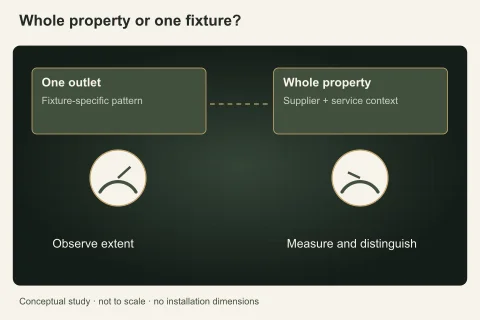
List the fixtures involved and whether one discharging fixture affects another. A slow bathroom basin, several backed-up fixtures and wastewater entering a low floor drain describe different situations. Note gurgling, odour, rain timing and previous blockages without repeatedly running water to reproduce an overflow. In a multi-unit building, ask management whether other units report the same event.
Describe known accessible cleanouts and retain earlier camera recordings. Do not open a shared cleanout yourself or assume a pipe’s route from the position of one fixture. A simple room sketch with the observed pattern helps the operator plan access more reliably than an unconfirmed claim about the main sewer.
Ask why the proposed method fits
Mechanical clearing, water jetting and camera inspection have different purposes and limitations. The operator should consider the opening, pipe material, condition and obstruction before selecting equipment. Ask what could prevent a safe attempt, what happens if the line cannot be passed and whether another access point would require approval. A method name is not a guarantee that every obstruction or defect can be resolved.
Disclose drain chemicals already introduced, including approximate timing and product information. Avoid adding another substance or mixing products. The attending professional needs that history to plan safe handling; it is not a reason for a homeowner to operate equipment or dismantle contaminated drainage.
Specify what a camera inspection delivers
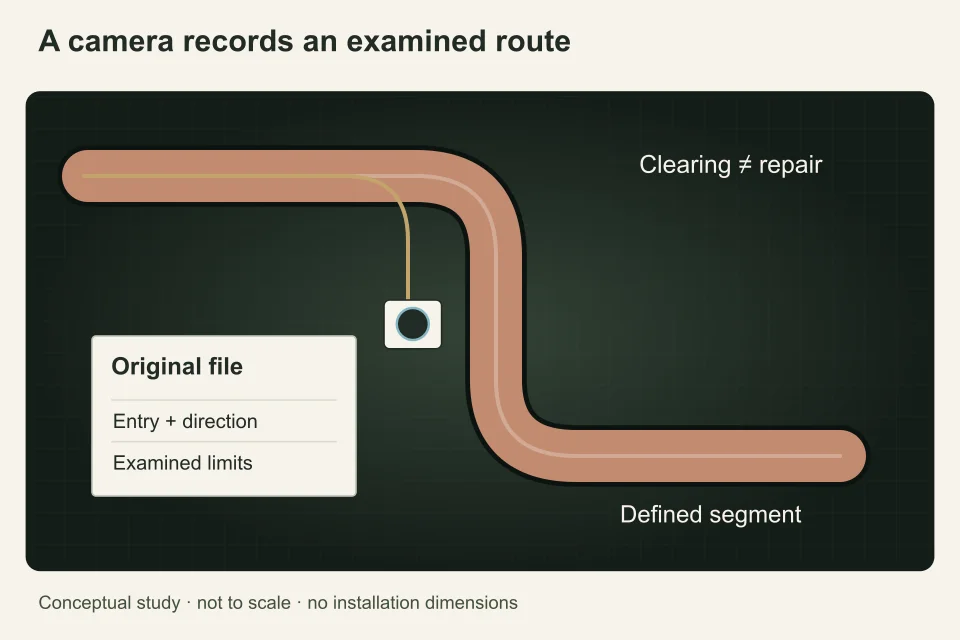
If camera work is included, ask for the recording, entry point, direction of travel and written findings. Clarify whether locating a defect at the surface is included and how any available distance information is interpreted. A still image can omit the approach to a joint or another segment that could not be examined. An incomplete inspection should say where it stopped and why.
Images support observations; they do not alone supply a complete excavation, lining or replacement design. If a repair is proposed, connect it to the inspected segment, access constraints and additional measurements needed. Preserve the original file so another professional can review the same evidence rather than only a sales summary.
Keep public and private systems separate
Private building drainage, a municipal sewer and stormwater infrastructure may involve different owners and authorities. A drain contractor’s visit does not grant permission to alter a public connection or use a road allowance. If there are wider neighbourhood symptoms, report them to the responsible utility and keep the reference number. The exact service boundary must be established for the property.
A rain-related basement issue also requires care: exterior drainage and sanitary wastewater are not interchangeable systems. Tell the operator which route is being investigated. A cleared sanitary line does not prove that perimeter drainage or a sump discharge arrangement is correct, even when the pipes sit close together.
Compare the result and unsuccessful-work terms
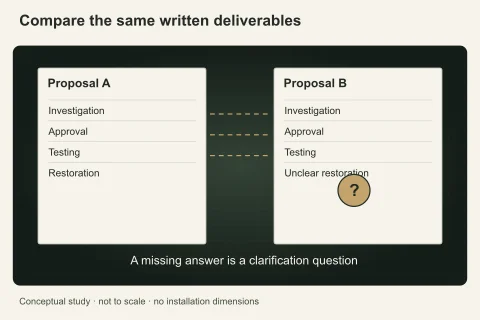
A quote should identify the access opening, equipment allowance, inspection deliverables, disposal and reinstatement. Ask how an unsuccessful attempt is charged and who authorizes a change of method. Compare whether the price buys an attempt, a defined amount of time or a specified outcome with stated limitations. This is more informative than comparing two unexplained “drain service” totals.
The closeout should describe what was removed or observed, which fixtures were checked and what remained restricted. Recurring symptoms may justify further investigation rather than the same presumed treatment. A structural repair and surface restoration need their own written scope after the evidence identifies the relevant segment.
Prepare a drain-service request
Build a drain-service request around the decision you need. Identify affected fixtures, known cleanouts, prior clearing and any chemicals used. Say whether wastewater is still rising and whether common building drainage may be involved. Select the province and community yourself, identify the property type and say whether you are the owner, tenant or authorized manager. An approximate location is sufficient for early planning; private access instructions and personal documents belong in a later secure conversation with the person who actually needs them. Distinguish a preferred date from confirmed attendance, and tell the reviewer which facts are still unknown.
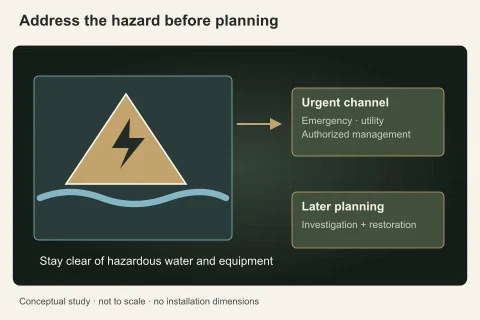
PlumbersNearMe.ca is a Canadian reference and human-reviewed request service. It is not a plumbing contractor, ranked directory or emergency dispatcher, and a submitted request does not reserve a provider. A person reviews the information and replies without a promised response time. Retain original camera files where purchased, the accessible route description and limitations of any unfinished examination. Keep the written agreement, approvals and completion evidence with the property record. Use the request form after any immediate safety need has been addressed; do not wait for this site to respond to an active hazard.
Questions people ask
Does successful clearing repair a crack?
Clearing may remove an obstruction without changing a crack, offset or sag. Ask what condition was actually observed afterwards. A repair proposal needs evidence and a defined segment rather than treating restored flow as proof of sound pipe.
Do all drain visits need a camera?
A camera should serve a useful investigation purpose and may be impractical before clearing. Ask whether inspection is included, optional or conditional. If sold, specify the recording and report rather than accepting a few unexplained still images.
Can I compare jetting and augering by price?
Only after understanding the same access, condition and deliverables. Equipment suitability matters more than a method label. Include unsuccessful-work terms, camera extras and restoration before treating two totals as comparable alternatives.
Who handles a suspected public sewer problem?
Contact the relevant municipal or utility reporting channel for the chosen location. A private operator can describe building symptoms but should not assume authority over public infrastructure. Keep any report number and clarify the private service boundary.
Sources and further reading
- Floods — Get prepared ↗ · Public Safety Canada. Checked 2026-10-02.
- National Plumbing Code of Canada 2025 ↗ · National Research Council Canada. Checked 2026-10-02.
- Home renovations ↗ · Office of Consumer Affairs, Government of Canada. Checked 2026-10-02.
Confirm the current requirements with the responsible authority for the actual address and work. This reference does not replace site assessment or an official decision.