Make a clear written report
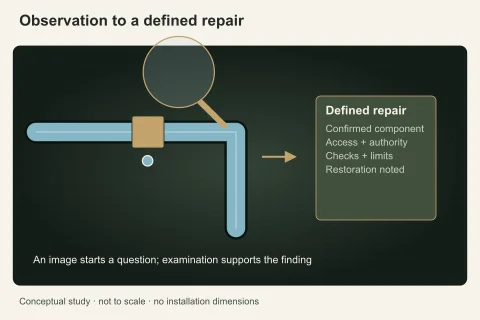
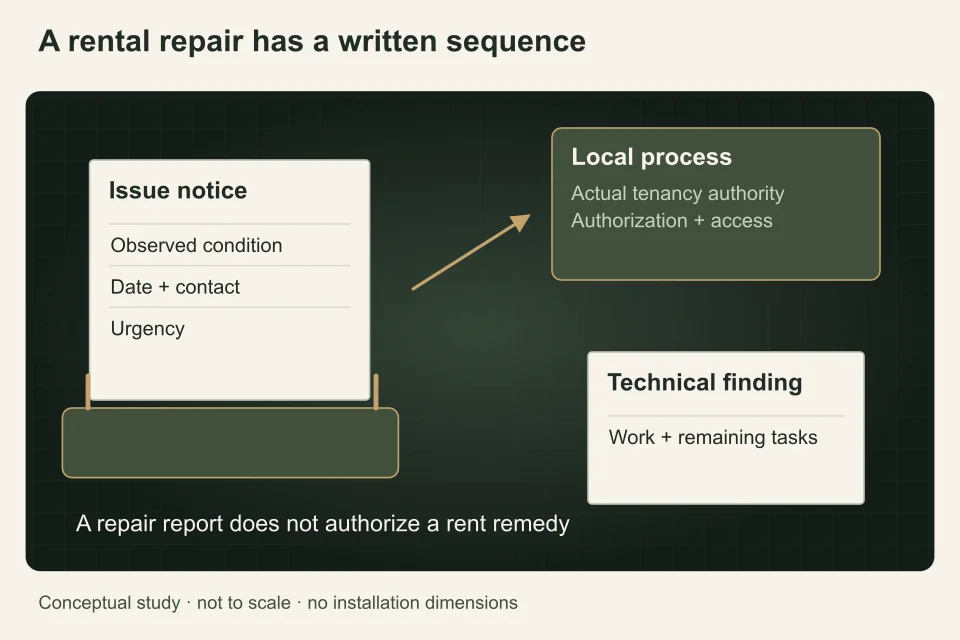
Describe the affected fixture or room, when the symptom began and how it affects ordinary use. Include safe photographs and relevant earlier correspondence. Distinguish an observation from a guessed cause: a wet ceiling after fixture use does not identify which concealed connection failed. Keep a dated copy of the report and the contact used.
Identify any immediate hazard so it is not treated as a routine appointment request. Avoid sharing unrelated personal or household details. The report should allow the responsible person to understand the technical concern and urgency without requiring the tenant to conduct unsafe tests.
Use the rules for the actual province
Tenancy repair procedures, access requirements and emergency arrangements differ across jurisdictions. BC’s official repair guidance is a labelled regional example, not a Canadian instruction to deduct rent or hire a contractor. Find the relevant provincial tenancy authority and read its current process for the situation.
Do not assume that ordinary repair requests and legally defined emergency repairs follow the same steps. Where responsibilities or reimbursement are disputed, obtain appropriate advice. This guide organizes evidence and questions; it does not determine a tenant’s legal remedy or authorize spending on someone else’s property.
Keep emergency response and permanent work distinct
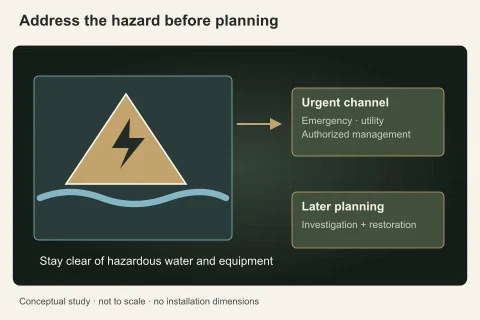
Active flooding, sewage, electrical exposure or another hazard needs an appropriate urgent channel. Contact the responsible landlord, management, utility or emergency service as the situation requires. Do not wait for this site’s planning review. Record the incident reference, attendance and temporary action afterwards.
A temporary response can leave diagnosis, restoration and permanent repair outstanding. Ask which restrictions remain and who coordinates the next stage. Keep that technical status separate from later allocation of costs. Neither a tenant’s emergency report nor a plumber’s temporary action automatically defines the full permanent alteration scope.
Coordinate authorized access
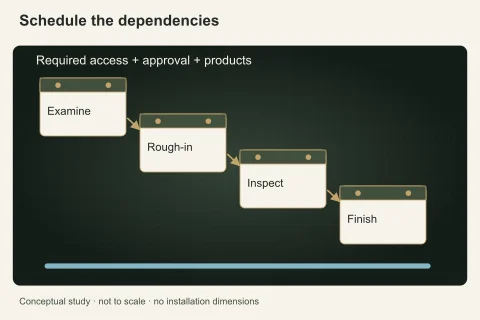
The owner or responsible manager should confirm the appointment, required spaces and access process under applicable rules. Tell them about practical constraints without promising entry to neighbours or shared rooms you do not control. A contractor needs the correct authorization and someone who can answer scope questions when concealed conditions are found.
Separate the resident’s availability from approval to spend or change the installation. Ask who receives findings and who approves additional work. Keep precise access instructions out of a broad planning form; share them through the agreed channel with the confirmed attending person.
Retain findings and unfinished tasks
Request a record of the investigated and repaired components, relevant checks and any limits. Note whether finishes, drying or other restoration remain. The tenant may need an explanation of usable fixtures and restrictions, while the owner retains the contract and approval records. Both should avoid treating an invoice title as proof that every symptom has been resolved.
If the issue recurs, reference the earlier event and finding rather than rewriting the history. Preserve dated correspondence and the work summary for the appropriate process. Redact unrelated personal information when obtaining another technical opinion or comparing a future scope.
Prepare a rental repair request
Build a rental-repair request around the decision you need. State the province, role as tenant or owner, observed issue, reports already made and known authorization. Identify immediate safety action separately from unresolved ordinary repair questions. Select the province and community yourself, identify the property type and say whether you are the owner, tenant or authorized manager. An approximate location is sufficient for early planning; private access instructions and personal documents belong in a later secure conversation with the person who actually needs them. Distinguish a preferred date from confirmed attendance, and tell the reviewer which facts are still unknown.
PlumbersNearMe.ca is a Canadian reference and human-reviewed request service. It is not a plumbing contractor, ranked directory or emergency dispatcher, and a submitted request does not reserve a provider. A person reviews the information and replies without a promised response time. Use the review to organize the brief and local-process questions; it does not replace the tenancy authority or authorize work and payment. Keep the written agreement, approvals and completion evidence with the property record. Use the request form after any immediate safety need has been addressed; do not wait for this site to respond to an active hazard.
Questions people ask
Can a tenant hire a plumber and deduct rent?
Do not assume that. Rules and emergency processes depend on the jurisdiction and facts. Consult the relevant tenancy authority or appropriate advice before spending or changing payments. This planning guide does not authorize a remedy.
What should the first repair report include?
Describe the symptom, affected use, timing and safe evidence. Keep a dated copy and identify any hazard. Avoid prescribing an unconfirmed repair or adding unrelated personal details that do not help the responsible person arrange investigation.
Does availability mean I can approve extra work?
Not necessarily. Entry and spending authority are different. Identify the responsible owner or manager and the change-approval process before attendance. The contractor should know who can authorize further investigation or alteration.
What if the same symptom returns?
Reference the previous report and work findings, then describe the new event accurately. A recurrence may need another investigation rather than the same assumed fix. Retain correspondence and use the jurisdiction’s appropriate repair process.
Sources and further reading
- Repairs and maintenance ↗ · Province of British Columbia. Checked 2026-10-02.
- Floods — Get prepared ↗ · Public Safety Canada. Checked 2026-10-02.
- Home renovations ↗ · Office of Consumer Affairs, Government of Canada. Checked 2026-10-02.
Confirm the current requirements with the responsible authority for the actual address and work. This reference does not replace site assessment or an official decision.