Define the question the visit should answer
Identify the observed problem and the decision blocked by uncertainty. A wet ceiling may need source investigation; recurring drain trouble may need route inspection; poor hot water may need equipment and distribution assessment. Ask which examination is likely to provide useful evidence for that question. Avoid commissioning an expensive method simply because it sounds comprehensive.
Give the provider the event history and previous reports before the visit. Mark inaccessible areas and unconfirmed assumptions. The goal is a reasoned finding with limits, not agreement with a cause selected by the owner before any examination occurs.
Agree the included examination
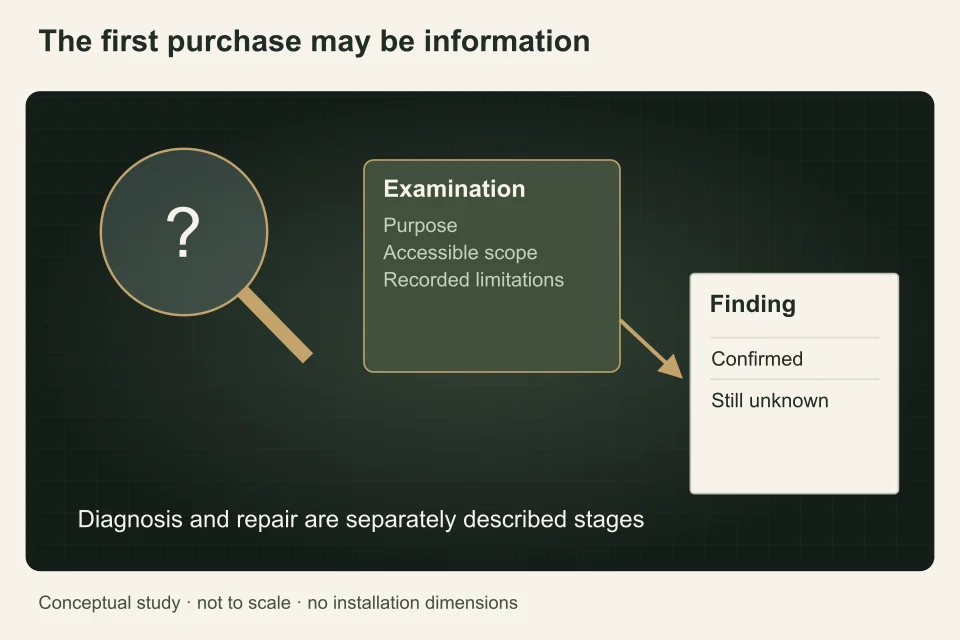
Ask whether the visit includes visual checks, controlled testing, specialist equipment, a recording and a written report. Establish any time or access boundary. Opening a wall, entering another unit or arranging a second specialist may require separate approval. A diagnosis cannot be promised where essential evidence remains inaccessible.
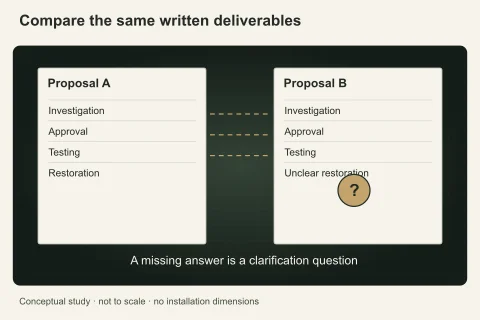
Clarify how the professional will explain a finding and distinguish confirmed evidence from plausible alternatives. A short verbal statement may not meet the needs of a landlord, corporation or insurer. Tell the provider what record is required before assuming that an ordinary visit includes a formal cause report.
Understand payment when no repair occurs
A paid investigation can be complete even if no permanent repair is performed. Read the visit terms and ask what happens if the cause cannot be established within the agreed access. Clarify equipment, travel, minimum terms and any credit toward later work without assuming that such a credit exists.
Compare the promised information with the payment rather than treating an unresolved outcome as automatically free. Equally, a charge alone does not prove that the agreed examination occurred. Ask for the work record and limitations. The written arrangement should explain what a useful but incomplete investigation looks like.
Set authority for the next step
Identify who can approve an opening, repair or extended investigation and how the price will be confirmed. In a rental or condominium, the attending resident may not have that authority. Keep an authorized contact available through the responsible owner or manager. A provider should not have to guess whether a diagnostic appointment permits a larger alteration.
If urgent safety conditions arise, the appropriate immediate response is distinct from an ordinary scope expansion. Document temporary action and then establish the permanent proposal. Do not use a broad advance instruction to “do whatever is needed” as a substitute for defined authorization and evidence.
Convert the finding into a usable decision
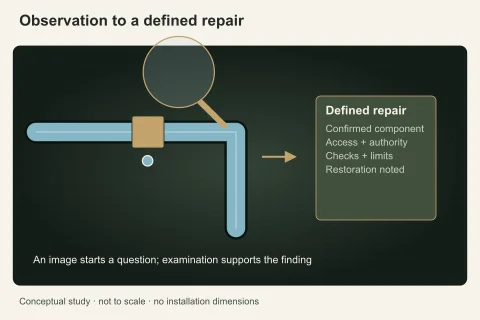
The result should describe examined components, confirmed observations, inaccessible areas and recommended next evidence or work. Ask why the proposal addresses the original symptom and what it cannot establish. A camera still or isolated reading should be interpreted in context rather than presented as an entire design.
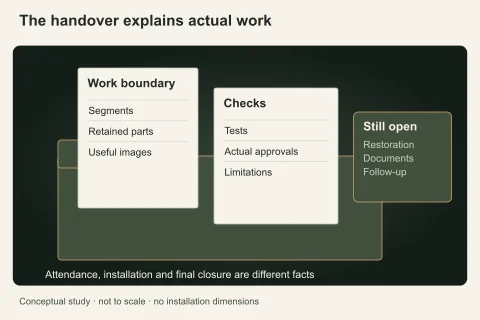
Retain the report for later quotes so providers price the same finding. If the next proposal differs, ask whether new evidence or a different assumption explains the change. Keep diagnostic records separate from completion records: finding a fault does not demonstrate that it has been repaired or that all damage has been restored.
Prepare an investigation request
Build a investigation request around the decision you need. State the question you need answered, symptom timing, prior examination and safe access limitations. Explain whether a written report is needed for another responsible party. Select the province and community yourself, identify the property type and say whether you are the owner, tenant or authorized manager. An approximate location is sufficient for early planning; private access instructions and personal documents belong in a later secure conversation with the person who actually needs them. Distinguish a preferred date from confirmed attendance, and tell the reviewer which facts are still unknown.
PlumbersNearMe.ca is a Canadian reference and human-reviewed request service. It is not a plumbing contractor, ranked directory or emergency dispatcher, and a submitted request does not reserve a provider. A person reviews the information and replies without a promised response time. Ask what the first visit can establish, how an incomplete examination is reported and what approval is needed before further work. Keep the written agreement, approvals and completion evidence with the property record. Use the request form after any immediate safety need has been addressed; do not wait for this site to respond to an active hazard.
Questions people ask
Is a diagnostic fee the same as a repair price?
No. It may purchase examination and findings without a permanent fix. Ask what is included, what happens if evidence remains inaccessible and how later work is quoted. Keep the stages distinct in your budget.
Can a contractor promise certainty before attending?
Some visible tasks are clear, but concealed causes may remain uncertain. Ask what access and testing support the promise. A useful proposal states limitations instead of implying that every hidden source can be established from photographs.
Should the visit include a written report?
Specify that need before booking. Ordinary service notes and a formal cause report may differ. Identify the intended reader and information required so the provider can confirm the deliverable rather than relying on an assumed format.
What if a repair is possible during the visit?
Agree who can approve it and how scope and price are recorded. A diagnostic appointment is not automatic permission for unlimited alterations. Preserve the finding and completed-work record even when both stages happen during one attendance.
Sources and further reading
- Home renovations ↗ · Office of Consumer Affairs, Government of Canada. Checked 2026-10-02.
- National Plumbing Code of Canada 2025 ↗ · National Research Council Canada. Checked 2026-10-02.
Confirm the current requirements with the responsible authority for the actual address and work. This reference does not replace site assessment or an official decision.