Identify the system before allocating responsibility
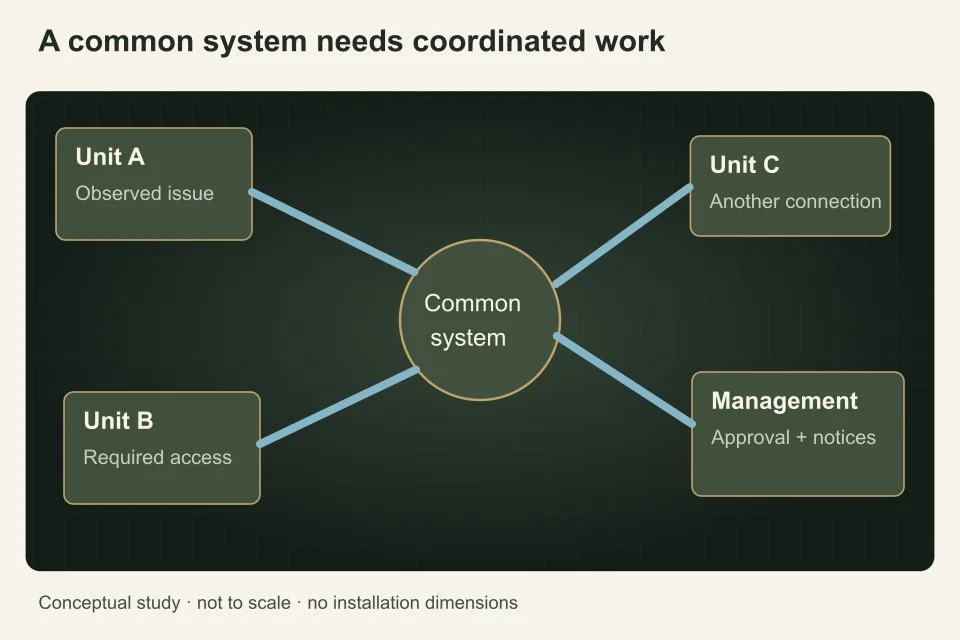
Describe the fixture, visible symptom and whether adjacent units have related problems. Ask management for available piping drawings and earlier work records without declaring ownership from a photograph. A pipe behind a unit wall can have a common function; a shared riser and an individual fixture connection may receive different treatment. The building’s governing documents and local law determine duties.
British Columbia’s strata repair guidance is a useful labelled example of lot and common-property distinctions. It is not a national condominium rule. Use the legislation and corporation documents for your province, then obtain advice where the boundary is disputed rather than asking a plumber to decide a legal allocation.
Obtain the authority to investigate and alter
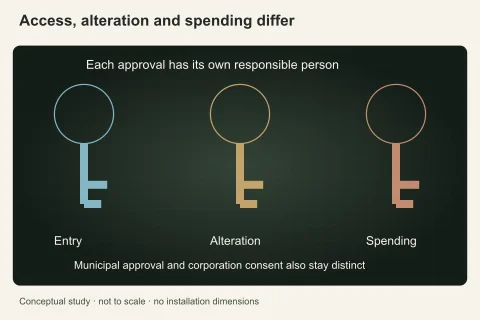
Confirm who can authorize access, spending, shutdowns and alterations to common systems. A resident’s request is not always enough to instruct work on a riser or enter another unit. Provide the manager with the proposed investigation, affected spaces and information needed to assess approval. Municipal permits and corporation consent are separate forms of authorization.
Keep the initial investigation limited if repair decisions still need approval. Establish an emergency procedure through building management before a problem occurs. When a hazard is active, use appropriate urgent channels; afterwards, document who attended and what temporary measures were taken without treating them as consent for an unlimited permanent alteration.
Plan access to more than one space
Shared plumbing work may need entry to service rooms, the unit above or below, and several isolation points. Ask the contractor which spaces must be available and let authorized management coordinate notices. Do not distribute neighbours’ private contact details or access codes through a broad planning request. Describe the required access in terms of rooms and responsible contacts.
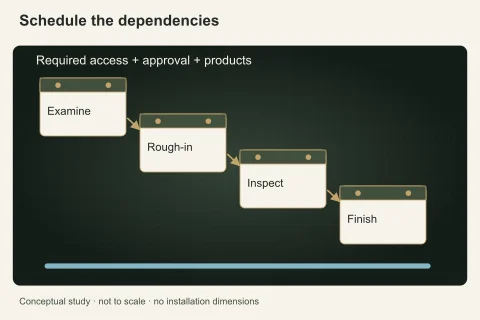
Occupied buildings also require protection of common corridors and a plan for equipment, waste and reinstatement. Confirm whether a booking window includes setup and removal. A contractor arriving at the advertised appointment time cannot complete work if the essential neighbouring space is unavailable or the shutdown has not been authorized.
Make shutdown and restoration duties explicit
Record which users lose service, the planned duration and what event would extend the shutdown. Only the responsible professionals and authorized building personnel should operate shared systems. Ask how management receives progress updates and what happens if exposed conditions prevent restoration as expected. Do not present a preferred duration as a guarantee to residents.
Damage restoration, fire-separation reinstatement and finishing may involve other qualified people. Identify who checks those interfaces and who records them before the area closes. A pipe repair that restores flow is one part of a building repair, not automatic confirmation that all common property and affected units have been reinstated.
Keep a building-level evidence record
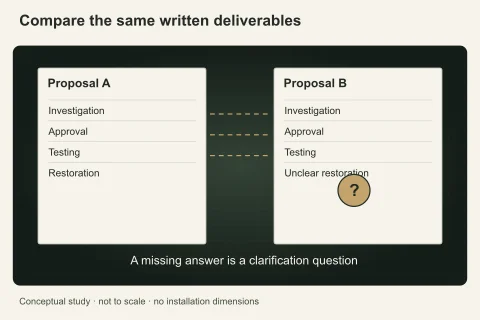
Request the examined and repaired segments, useful photographs, checks and relevant permits or inspection records. The corporation may need a summary that distinguishes common work from unit-specific work. Ask the contractor to describe technical findings while leaving insurance and payment decisions to the appropriate parties. Redact unrelated resident information when sharing documents for comparison.
Retain any remaining limitation: inaccessible branches, unexamined units or temporary components need follow-up ownership. A clear record helps later maintenance and prevents another owner from assuming the entire building was renewed when a single connection was repaired. Use the completion record guide to organize the handover.
Prepare a condominium request
Build a condominium request around the decision you need. Identify the affected unit and system, the authorized manager, known common-property questions and access needed beyond your own suite. Include the stage of corporation and municipal approvals. Select the province and community yourself, identify the property type and say whether you are the owner, tenant or authorized manager. An approximate location is sufficient for early planning; private access instructions and personal documents belong in a later secure conversation with the person who actually needs them. Distinguish a preferred date from confirmed attendance, and tell the reviewer which facts are still unknown.
PlumbersNearMe.ca is a Canadian reference and human-reviewed request service. It is not a plumbing contractor, ranked directory or emergency dispatcher, and a submitted request does not reserve a provider. A person reviews the information and replies without a promised response time. Request a technical scope and records that distinguish unit work, common work and unresolved restoration, without circulating private neighbour details. Keep the written agreement, approvals and completion evidence with the property record. Use the request form after any immediate safety need has been addressed; do not wait for this site to respond to an active hazard.
Questions people ask
Does a pipe inside my wall belong to me?
Location alone does not determine responsibility. Check plans, governing documents and the applicable provincial rules. Ask the investigator to describe the pipe’s function and segment while management or legal advice resolves disputed duties.
Can one owner authorize a shared shutdown?
Do not assume so. Obtain the corporation’s actual procedure and authorized contact. The contractor needs coordinated access and notice. A unit owner’s preferred appointment does not replace approval to operate a common system.
Who pays for opening the unit below?
That requires the building’s documents, cause evidence and applicable insurance or legal arrangements. Establish authorization and restoration duties before opening. A plumber’s technical finding can inform the decision without determining coverage or liability.
Can this site arrange building attendance?
No. The request is human-reviewed planning, not a booking or dispatcher. Coordinate attendance with the actual contractor and management. Active hazards require the building’s urgent procedure and the appropriate emergency or utility response.
Sources and further reading
- Division of repair duties in a strata ↗ · Province of British Columbia. Checked 2026-10-02.
- National Plumbing Code of Canada 2025 ↗ · National Research Council Canada. Checked 2026-10-02.
- Home renovations ↗ · Office of Consumer Affairs, Government of Canada. Checked 2026-10-02.
- Floods — Get prepared ↗ · Public Safety Canada. Checked 2026-10-02.
Confirm the current requirements with the responsible authority for the actual address and work. This reference does not replace site assessment or an official decision.